Syrian Forces Clash With Uzbek Fighters in Idlib After Kafraya Arrest, SOHR Reports Raids and Curfew
2
Towns Raided
1
Foreign Fighter Detained
2nd
Foreign-Fighter Confrontation in Months
📍 Idlib province : Kafraya and al-Fuah security operation, 6 May 2026

Operation sites in northern Idlib countryside. Datum WGS84, UTM Zone 37S. Map: Strategy Battles / OSINT.
📍 KAFRAYA
MGRS: 37S BV 89912 80422
35.9456°N 36.6708°E
Town in northern Idlib countryside. Site of arrest of Uzbek fighter that triggered the wider security operation.
📍 AL-FUAH
MGRS: 37S BV 89949 81953
35.9594°N 36.6708°E
Adjacent town raided alongside Kafraya. SOHR reports raids and arrests of Uzbek fighters with intensive drone overflights.
📍 IDLIB CITY
MGRS: 37S BV 86496 79139
35.9333°N 36.6333°E
Provincial capital and administrative seat. Separate Uzbek armed groups previously laid siege to a security headquarters in the city in late April.
🔴 The Operation
Raids in Kafraya and al-Fuah Trigger Armed Backlash by Uzbek Fighters
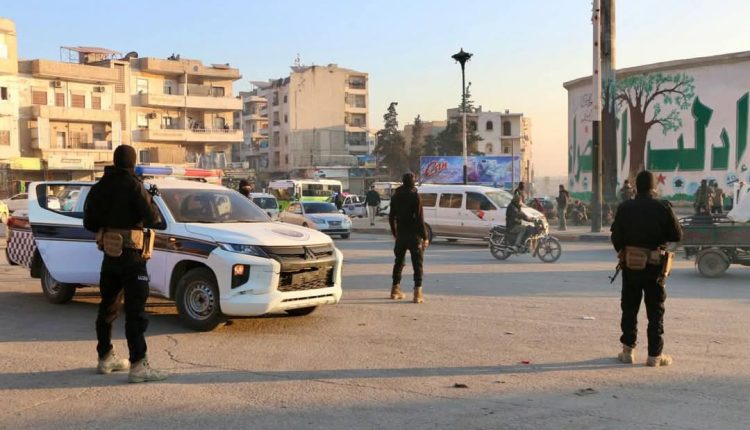
Clashes broke out early on Wednesday between security forces of the Syrian government and Uzbek fighters in the northwestern Idlib province after state forces carried out a security operation, according to the Britain-based Syrian Observatory for Human Rights (SOHR). The flashpoint sits at grid reference 37S BV 89912 80422 (35.9456°N, 36.6708°E), in the town of Kafraya in northern Idlib countryside, with raids extending north to al-Fuah at 37S BV 89949 81953 (35.9594°N, 36.6708°E).
SOHR reported that the operation included raids and arrests targeting fighters of Uzbek nationality in the towns of al-Fuah and Kafraya, coinciding with intensive drone flights overhead. Security forces subsequently imposed a curfew on the area, the monitor said. Damascus has not issued an official statement on the operation, and reports of casualties on either side remain unverified.
The trigger appears to have been a single arrest. A Telegram account close to the Uzbek fighters said tensions rose after a foreign fighter, identified by the nom de guerre Abu Ali al-Tajiki, was arrested in Kafraya, with the channel alleging he was beaten during detention. The single-source Telegram account is treated here as a partisan claim. The Syrian Observer, citing the outlet Ultra Syria, reported a separate account: that the same fighter was detained after firing shots inside the city, and that he had previously been linked to the al-Qaeda affiliate Hurras al-Din.
Syrian Observatory for Human Rights, 6 May 2026
“The operation included raids and arrests targeting fighters of Uzbek nationality in the towns of al-Fuah and Kafraya, coinciding with intensive drone flights.”
🟡 Background
Why Uzbek Fighters in Idlib Matter to Damascus
Uzbek militants have fought in Syria since the early years of the civil war, primarily under groups like Katibat al-Imam al-Bukhari (KIB) and Katibat al-Tawhid wal-Jihad (KTJ). Both groups have been historically affiliated with al-Qaeda, and KIB has been designated a foreign terrorist organisation by the United States Treasury. The fighters are concentrated in the same belt of Idlib countryside that the operation targeted, with Kafraya and al-Fuah long acting as enclaves for foreign nationals after the displacement of the towns’ original Shia residents in 2018.
The Syrian government, under interim President Ahmed al-Sharaa, has been under sustained pressure from the international community to remove foreign jihadists from the country, particularly as a precondition for the lifting of remaining Western sanctions. The arrest of Abu Dujana al-Turkistani in October 2025, profiled by the Jamestown Foundation as one of the most prominent Uyghur jihadists in Syria, was the first signal that Damascus would move against foreign fighter networks. A campaign of further detentions across Idlib followed through late 2025, drawing complaints that Sharaa was not honouring his earlier promises to integrate Central Asian fighters into the new Syrian armed forces.
This is not the first armed confrontation. In late October 2025, government forces clashed in the Harem area of northwestern Idlib with Firqat al-Ghuraba, a French-led foreign fighter group commanded by Omar Diaby, also known as Omar Omsen, designated an international terrorist by the United States. The dispute centred on alleged abuses inside the al-Fardan camp for foreign fighters and their families. Days before the latest Kafraya operation, Western Syria Development reported that an Uzbek armed group had besieged a Criminal Security headquarters inside Idlib city to forcibly free a detained member, suggesting the foreign-fighter problem is now flaring across multiple sites.
🔵 The Wider Pattern
Drones, Curfews and the Slow-Motion Push to Disarm Foreign Fighters
The presence of intensive drone overflights during the Kafraya raids, as reported by SOHR, marks a tactical step beyond the dawn-raid arrests seen earlier in the campaign. Drone surveillance of the operation zone gives state forces a real-time picture of fighter movement and offers a deterrent against ambushes from neighbouring foreign-fighter compounds. The curfew that followed the raids is the standard response after operations of this kind: lock down the population, allow time for arrest sweeps to be completed, and reduce the chance of armed retaliation.
The operation also reveals the limit of the al-Sharaa government’s preferred quiet approach. Earlier detentions of senior Uzbek and Uyghur figures were carried out without firefights. The fact that this round produced clashes, public mobilisation by Uzbek armed groups and a parallel siege of a security building in Idlib city points to a hardening of resistance among the foreign-fighter community. Each individual arrest is now a flashpoint, and the network of Central Asian battalions has shown it will mobilise armed force to contest detentions.
For Damascus, the political stakes are external as much as internal. Lifting of the remaining United States Caesar Act provisions and European aid hinges in part on visible progress in expelling or disarming foreign jihadist contingents. The October 2025 detention of Abu Dujana al-Turkistani was widely read as a signal to Washington and Ankara. The Kafraya operation continues that signalling, but at higher cost. If casualties are confirmed in coming days, the Sharaa government will have to balance the political dividend abroad against the security blowback inside Idlib, where foreign fighters and their families remain a numerous and armed constituency.
Strategy Battles Assessment
Sharaa’s foreign-fighter problem is moving from quiet detentions to open clashes, and Idlib is the test bed.
The Kafraya and al-Fuah raids matter less for what happened on a single Wednesday morning than for the pattern they confirm. Damascus has been working through a list of named foreign jihadist commanders since at least October 2025, and each successive arrest has produced a louder reaction from the Central Asian fighter community. Within a single week the government has now seen an Uzbek armed group besiege a Criminal Security headquarters in Idlib city and a separate operation in the Kafraya area produce open clashes and a curfew. The line from individual arrest to organised armed response is shortening.
There is also a clear external audience. The United States and the European Union have linked sanctions relief and full reintegration of Syria into the regional system to demonstrable progress on foreign fighters, and Sharaa’s team is using each operation to demonstrate compliance. The risk is that the same operations, if they produce dead Uzbek fighters or dead civilians in Kafraya and al-Fuah, will be used by surviving Central Asian battalions and their al-Qaeda-aligned interlocutors to argue that Sharaa has betrayed the foreign muhajireen who fought to bring him to power. That is the fragile balance the Idlib security file now sits on, and it is why the absence of casualty figures in the first 24 hours is itself worth watching closely.
Strategy Battles Related Coverage
Sources
- The New Region (Erbil), Syrian government forces, Uzbek jihadists clash in Idlib (6 May 2026)
- The Syrian Observer, Security Tension in Idlib After Brief Arrest of Uzbek Fighter (May 2026, citing Ultra Syria)
- Western Syria Development, Idlib: Uzbek Armed Groups Besiege Criminal Security Headquarters (May 2026)
- Jamestown Foundation, Muhojir Tactical Leadership Duo Arrested in Syria (January 2026)
- The Times of Central Asia, Syrian Forces Intensify Arrests of Uzbek and Foreign Militants in Idlib (September 2025)
- Syrian Observatory for Human Rights, primary monitor reporting
Editorial Verification
SOHR account of raids, arrests and intensive drone flights in al-Fuah and Kafraya: 3 independent corroborating outlets (The New Region, The Syrian Observer, Western Syria Development). Curfew imposition: single-source SOHR (carried by The New Region). Telegram channel claim that the detained fighter (“Abu Ali al-Tajiki”) was beaten during arrest: single-source partisan account, flagged in body text and not treated as verified. Ultra Syria account that the same fighter fired shots before arrest and was previously linked to Hurras al-Din: single-source via The Syrian Observer. Casualty figures: not reported; all parties have not provided numbers at time of publication. Damascus had not issued a public response at time of publication.
MGRS datum: WGS84 / UTM Zone: 37S / Cross-check reference: Damascus 37S BT 47029 11570.
No satellite imagery used in this report.
All claims independently attributed and verified to open sources where possible.
Approved for Publication
Marcus V. Thorne
Lead Editor, Strategy Battles
©StrategyBattles.net 2026
This article is for news and analysis purposes only. Based on publicly available news sources and military updates. All rights reserved. Not for commercial reuse without permission.