Iran Requests S-400 From Russia as Araghchi Meets Putin
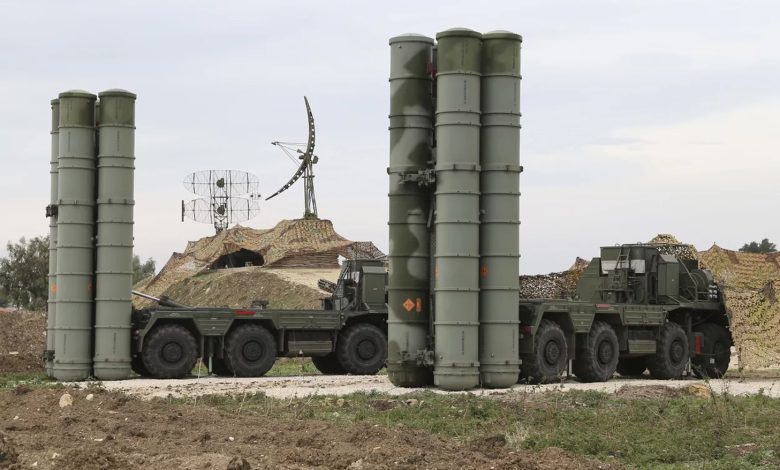
S-400
System Requested by Iran
Apr 27
Araghchi-Putin Meeting
155M bbl
Iranian Oil Stranded at Sea

Iran-Russia diplomatic axis April 2026. Araghchi route: Tehran to St. Petersburg. Source: The Telegraph / TASS / Al Jazeera / StrategyBattles.net
🔴 The S-400 Request
Iran has asked Moscow for its most capable air defence system
Iran has formally requested Russia supply it with the S-400 air defence system, according to reporting by The Telegraph citing the Araghchi-Putin meeting in St. Petersburg. The request came after months of US and Israeli strikes that exposed serious gaps in Iran’s existing defensive coverage.
The S-400 is designed to intercept aircraft, ballistic missiles, and cruise missiles at range. Its acquisition by Iran would represent a qualitative shift in Tehran’s capacity to defend its skies against the kind of strikes that have been launched against it since late February. The request was reportedly discussed alongside broader questions about how the war might be brought to a close.
No public confirmation has been issued by either Moscow or Tehran. Strategy Battles treats this as a single-source claim from The Telegraph, corroborated only by the fact of the Araghchi-Putin meeting itself, which is confirmed across multiple outlets.
🟡 The Araghchi-Putin Meeting
Iranian foreign minister flies to St. Petersburg as peace talks with Washington stall
Iranian Foreign Minister Abbas Araghchi met with Russian President Vladimir Putin in St. Petersburg on April 27, 2026. Araghchi arrived after holding earlier talks with Omani and Pakistani officials, continuing a diplomatic circuit aimed at building external support for Iran’s negotiating position.
Putin told Araghchi that Russia was ready to do everything that serves Iranian interests and the interests of the wider region so that peace could be achieved as soon as possible. He praised the Iranian people for what he described as fighting courageously for their independence. Russia’s state media TASS reported Putin as confirming that Moscow intends to continue its strategic relationship with Tehran regardless of the circumstances.
Araghchi framed the visit in terms of strategic continuity, telling Iranian media he had travelled to Russia to continue close consultations on regional and international issues. He said the meetings would be a good opportunity to discuss developments in the war and review the latest situation. Iran’s ambassador to Russia, Kazem Jalali, described the visit in a post on X as part of Iran’s diplomatic effort amid external threats.
🔵 The Nuclear Deadlock
Iran’s proposal fails to address enrichment; Trump cancels Pakistan trip
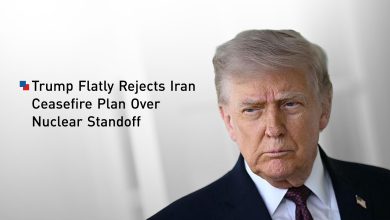
The Araghchi-Putin meeting came directly after the breakdown of a potential new round of US-Iran talks. The New York Times reported, citing two senior US officials, that President Trump had reviewed a new Iranian proposal and found it insufficient. The proposal, delivered through Pakistani mediators, offered to ease restrictions on the Strait of Hormuz but did not address uranium enrichment or the fate of Iran’s stockpile of enriched uranium.
Trump cancelled plans to send special envoy Steve Witkoff and adviser Jared Kushner to Islamabad for a direct meeting, citing what he described as confusion within Tehran’s leadership. Speaking on Fox News, Trump reiterated that Iran cannot have a nuclear weapon and that there is no reason to meet until that condition is accepted. The Wall Street Journal reported that Trump and his team were increasingly suspicious that Iran was not negotiating in good faith.
Secretary of State Marco Rubio reinforced that position, saying in separate remarks that the level of sanctions and pressure on Iran was extraordinary and could be increased further. He also described the Strait of Hormuz as being used by Iran as an economic nuclear weapon. Iran’s President Pezeshkian, meanwhile, told Pakistan’s prime minister by phone that Tehran would not enter imposed negotiations under threats or with a blockade in place.
Putin — Russian State Media TASS, April 27, 2026
“For our part, we will do everything that serves your interests, the interests of all the people of the region, so that peace can be achieved as soon as possible.”
🔴 Energy Pressure
US Treasury warns of Iranian fuel crisis as oil tankers pile up at Chabahar
US Treasury Secretary Scott Bessent predicted that Iran’s domestic fuel supply is at risk of crisis. He said that US naval blockades and sanctions had caused serious damage to Iran’s oil industry and that refineries could soon fail, producing a shortage of gasoline inside the country. He also warned foreign governments and companies against dealing with Iran’s energy sector, threatening US sanctions for any violation.
Bloomberg’s satellite imagery analysis supported the scale of the pressure. Around eight large tankers and several smaller vessels were identified near Iran’s Chabahar port, outside the Persian Gulf, where they appeared to be loading oil despite being unable to move cargoes to buyers. Bloomberg estimated that approximately 155 million barrels of Iranian crude were either in transit or stored on vessels, with it remaining unclear how many empty tankers Iran had available for additional shipments.
The combination of export blockades and full storage tanks was reported to be slowing oil extraction and forcing parts of the sector to halt operations entirely. The domestic pressure described by Bessent and the export bottleneck visible in the Bloomberg imagery form two ends of the same supply chain problem.
🔵 Russia-Iran Normalisation
Mahan Air resumes Tehran-Moscow route as Iranian airspace partially reopens
Alongside the defense and diplomatic dimensions of the Araghchi visit, there were signs of logistical normalisation between the two countries. Russian outlet Novosti cited sources at Moscow’s Sheremetyevo Airport confirming that a Mahan Air flight had departed from Tehran for Moscow, the first such flight since February 26. Services had been suspended when Iranian airspace was closed following the escalation of hostilities.
Iran’s Civil Aviation Organization confirmed that airspace over parts of the country’s east had reopened on April 18, and said the resumption of flights would be gradual depending on technical, military, and civilian readiness. Key airports including Imam Khomeini, Mehrabad, Mashhad, and Zahedan were reported to be back in operation.
The resumption of commercial aviation between Tehran and Moscow, taken alongside Araghchi’s public framing of Russia as a strategic partner, suggests that the Russia-Iran relationship is being deliberately reinforced at a moment when Western pressure on both countries is at its highest.
Araghchi — TASS, April 27, 2026
“Relations between Moscow and Tehran represent a strategic partnership at the highest level and will continue to develop regardless of circumstances.”
Strategy Battles — Related Coverage
Sources
- Kurdistan24 — Iran Requests S-400 System from Russia as Defense Talks Intensify (April 28, 2026)
- The Moscow Times — Iran’s Foreign Minister Meets With Putin in St. Petersburg (April 27, 2026)
- Al Jazeera — Putin Praises Iranian Courage as Tehran’s Foreign Minister Visits Russia (April 27, 2026)
- The Jerusalem Post — Vladimir Putin Meeting Signals Iran’s Push for Support Amid Fragile US Talks (April 28, 2026)
- The Jerusalem Post — Iran’s Araghchi Seeks Moscow’s Backing as US-Iran Talks Stall (April 27, 2026)
- The Hill — Russia’s Vladimir Putin Meets Iran’s Abbas Araghchi, Commits to Deep Ties (April 28, 2026)
- The Washington Post — US Weighs Iranian Proposal That Would Open Strait of Hormuz but Delay Nuclear Talks (April 28, 2026)
Editorial Verification
The Araghchi-Putin meeting in St. Petersburg on April 27, 2026 is confirmed by TASS, Al Jazeera, The Jerusalem Post, The Hill, and The Moscow Times. Putin’s direct quotes are sourced to TASS via multiple corroborating outlets. Araghchi’s quotes are sourced to Iranian state media via Al Jazeera. The S-400 request is a single-source claim from The Telegraph as reported by Kurdistan24. It has not been independently confirmed by Strategy Battles. All Russian territorial claims and unverified assertions are labelled accordingly. The energy and tanker data is from Bloomberg. Trump cancellation of Islamabad trip is confirmed by multiple US outlets. Original editorial analysis by Strategy Battles.
Approved for Publication
Marcus V. Thorne
Lead Editor, Strategy Battles
©StrategyBattles.net 2026
This article is for news and analysis purposes only. It is based on publicly available news sources and military updates. All rights reserved. Not for commercial reuse without permission.