SOCOM’s ANCHOR Initiative: Special Operations Command Wants Drones, Lasers and AI for the Next Maritime War
6
Technology Focus Areas
JUN 1
Industry Response Deadline
OTA
Fast-Track Acquisition Authority
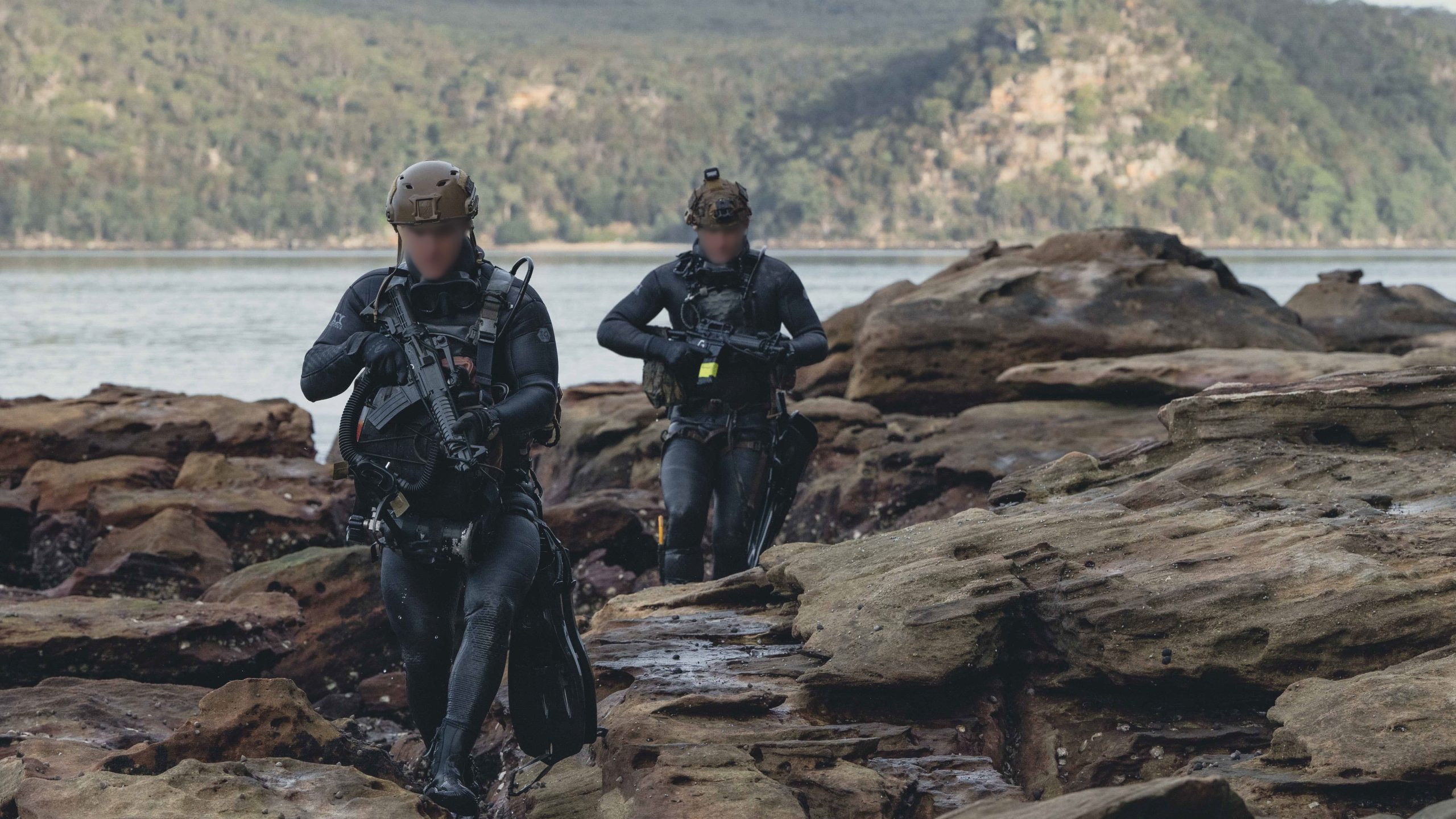
Naval Special Warfare operators train with Marine Raiders on the Australian coast during Exercise Talisman Sabre 25. Maritime multi-domain operations of this kind are the core focus of SOCOM’s new ANCHOR technology initiative. Photo: U.S. Navy / Mass Communication Specialist 2nd Class David Rowe.
🔵 The Initiative
SOCOM Issues Industry-Wide Call for Next-Generation Maritime and Multi-Domain Technology
U.S. Special Operations Command posted solicitation H9240626S0001 to SAM.gov on April 24, 2026, calling on companies, research organisations and non-profit groups to join a new technology development framework aimed squarely at the maritime and multi-domain fight. The programme is named the Advancing Naval Capabilities through Holistic Opportunities and Resources Initiative, known as ANCHOR, and it is being run by SOCOM’s Special Operations Forces Acquisition, Technology, and Logistics directorate.
ANCHOR is not a conventional contract competition. It is structured as a long-term partnership framework, under which accepted participants operate under a Participant Basic Agreement. The goal is to create a collaborative ecosystem capable of rapidly developing, demonstrating and transitioning prototype solutions directly into the hands of operators.
The deadline for initial industry responses is June 1, 2026, just over five weeks from the notice’s publication date. That compressed timeline is itself a signal: SOCOM is not running a years-long study. It is moving fast.
✅ The Legal Mechanism
Other Transaction Authority: How SOCOM Is Bypassing the Acquisition Grind
ANCHOR operates under Other Transaction Authority, specifically 10 U.S.C. 4022 and 4023. This is a legal provision that allows the Department of Defense to develop and award prototype agreements entirely outside the Federal Acquisition Regulation, the standard rulebook governing most Pentagon procurement. For a command that needs cutting-edge capability inside an operational window measured in months rather than years, OTA is the correct instrument.
The critical commercial advantage of OTA is what happens after a successful prototype. Under this framework, a prototype that performs can be transitioned directly to a follow-on production contract without re-competing the work. For companies accustomed to the standard procurement cycle, that is a meaningfully different proposition. Bring something that works and SOCOM can field it without starting over.
Participation is selective. Companies must demonstrate genuine technical relevance in at least one of the designated focus areas. Marketing material alone will not be considered. A government team of subject matter experts evaluates all submissions independently, and acceptance remains at USSOCOM’s sole discretion.
🔵 The Six Focus Areas
Drones, Lasers, AI and Human Performance: What SOCOM Actually Wants
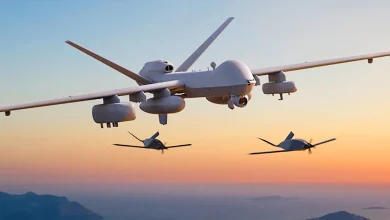
The ANCHOR solicitation identifies six distinct technology focus areas. The first is unmanned systems: autonomous aerial, surface and underwater platforms that extend operational reach, enable longer persistence in contested and denied environments, and deliver surveillance and reconnaissance data without exposing personnel to unnecessary danger. SOCOM specifically wants innovations in autonomy, sensing, endurance and resilient communications for maritime conditions.
The second focus area directly reflects lessons from the Ukraine conflict and the Iran war: counter-unmanned systems. As autonomous and remotely operated platforms have become cheaper and more accessible, the need for layered defences capable of detecting, tracking and neutralising hostile drones has become operationally critical. SOCOM is prioritising solutions optimised for size, weight and power, capable of functioning inside contested electromagnetic environments and effective against both individual platforms and coordinated swarms.
The third area is C5ISR, encompassing Command, Control, Communications, Computers, Cyber, Intelligence, Surveillance and Reconnaissance. SOCOM wants next-generation systems integrating multi-source intelligence, resilient communications and cyber-secure data networks that allow operators to sense, process and act faster than the adversary. AI-enabled real-time analytics and data integrity across denied or degraded environments are specifically called out.
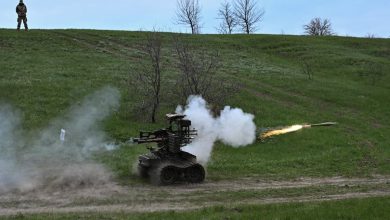
The fourth area is scalable effects: kinetic and non-kinetic systems usable from maritime platforms. SOCOM explicitly names directed energy systems, meaning lasers, alongside electronic warfare and cyber capabilities that can deliver tunable impacts on adversary systems without necessarily requiring lethal force. The fifth and sixth areas centre on the humans conducting these missions, calling for technologies that reduce psychological burnout, lower cognitive load, and introduce natural control methods such as gesture recognition and voice commands for managing unmanned systems.
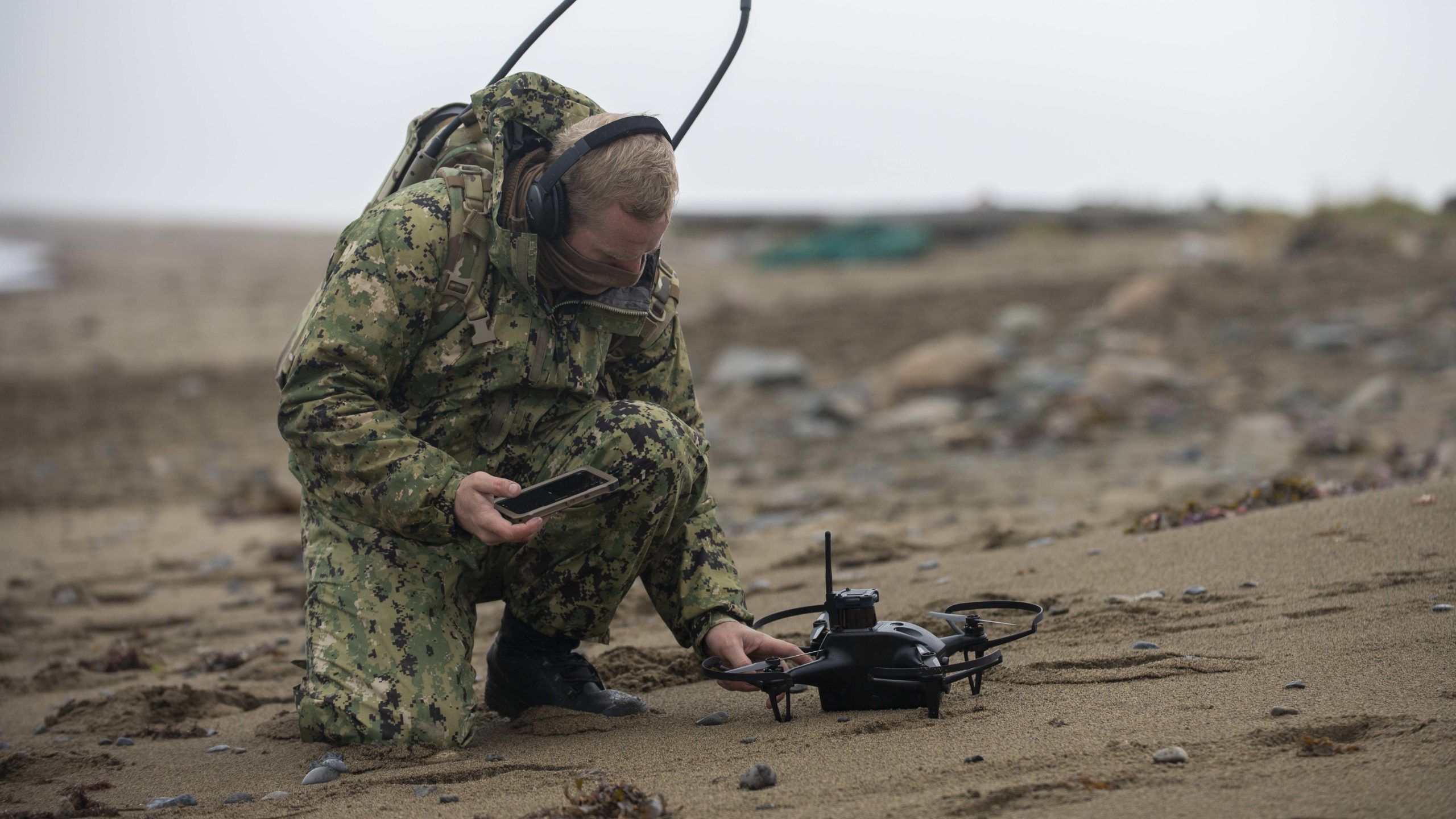
A Naval Special Warfare operator conducts security using a Shield AI Nova drone during Operation Noble Defender. Human-machine teaming of this kind is one of six focus areas in SOCOM’s ANCHOR Initiative. Photo: U.S. Navy / Mass Communication Specialist 1st Class Alex Smedegard.
🟡 Strategic Context
The Pacific Is Crowded. Hormuz Is Hot. Why SOCOM Is Rebuilding Maritime Irregular Warfare Now
ANCHOR does not exist in a strategic vacuum. At Sea-Air-Space 2026, Capt. Garrett Miller, commodore of Surface Development Group One, stated that the Navy aims to deploy thousands of unmanned surface vessels into the Indo-Pacific by 2030, including more than 30 medium unmanned surface vessels in the region by that date. The conventional fleet is reshaping itself around drone mass. Special operations forces are being expected to keep pace.
The conflict in Ukraine demonstrated what small explosive boats can do to a conventional fleet. The Iran war demonstrated how drones and irregular maritime tactics can apply strategic pressure on sea lanes without an adversary ever establishing sea control. Both conflicts confirmed the same operational logic: cheap, expendable, networked platforms are changing what it costs to contest the maritime domain.
SOCOM’s solicitation specifically notes that ANCHOR aims to enable a force capable of “distributed, networked, and resilient force employment from competition through high-end conflict.” That is language which encompasses both the grey zone operations that define daily maritime competition and the full warfighting requirement in a conflict with China or Iran. The maritime SOF team of 2030 is expected to operate in both environments simultaneously.
USSOCOM Solicitation — April 24, 2026
“While grounded in the maritime environment, the focus is on capabilities that seamlessly connect and operate across domains, enabling distributed, networked, and resilient force employment from competition through high-end conflict.”
🔴 The Human Burden
Cognitive Overload Is a Threat: SOCOM Treats Operator Burnout as a Capability Problem
One of the most operationally honest sections of the ANCHOR solicitation deals with what happens when a special operator is expected to simultaneously manage a drone swarm, monitor sensor feeds, maintain communications with dispersed units, navigate in GPS-denied conditions and remain ready to conduct direct action. The solicitation acknowledges that if the technology requires the operator to become a drone wrangler, sensor manager, comms technician and analyst all at once, the technology has failed.
The human performance and human-machine teaming focus areas are both designed to solve this problem. Augmented and virtual reality training technologies are called out specifically for allowing operators to rehearse complex and high-risk scenarios without the logistical constraints or safety risks of live exercises. Natural control methods, including gesture recognition and voice commands, are cited as a way to reduce the cognitive cost of managing machine systems during operations.
The underlying principle is a clear division of labour between human judgment and machine processing power. Machines handle surveillance, route assessment, sensor fusion and system management. Humans retain tactical decision-making authority. That division is what SOCOM is asking industry to help build.
🔵 STRATEGY BATTLES ASSESSMENT
ANCHOR is one of the clearest public statements SOCOM has made about the operating environment it expects to inhabit in the next decade. The six focus areas read less like a procurement wish list and more like a post-mortem of every maritime vulnerability exposed by the Ukraine and Iran conflicts run simultaneously against the threat model of a Chinese anti-access strategy in the Pacific. Each focus area addresses a gap that has already been exploited in live conflict.
The use of OTA is strategically significant beyond its procurement speed. By structuring ANCHOR as a long-term partnership vehicle with direct prototype-to-production pathways, SOCOM is effectively building a captive industrial base for irregular maritime warfare technology. Companies that get accepted early and deliver working prototypes will find themselves in a privileged position for the production contracts that follow. This is how SOCOM intends to ensure that its acquisition cycle runs at the speed of the threat rather than the speed of the Federal Acquisition Regulation.
The inclusion of psychological burnout and cognitive load as explicit technology design constraints is the most operationally mature element of the entire solicitation. SOCOM is acknowledging publicly what operators have known for years: the most advanced equipment in the world fails if it turns the warfighter into a system administrator under fire. That is a hard lesson, and the fact that it appears in a formal acquisition document suggests it has been learned at cost. The frogman still matters more than the hardware, and SOCOM is building its technology programme around that fact.
Strategy Battles — Related Coverage
→ Islamabad Collapses: Vance Says Iran Refused America’s Terms After 21 Hours
→ Iran Rejected U.S. Demands — Trump Orders Naval Blockade of Strait of Hormuz
→ Iran’s Spy Purge: 50 Arrested Across 16 Provinces for Mapping Missile Targets
Sources
- Task & Purpose — Special Operations Command Lays Out High-Tech Wish List (April 26, 2026)
- Defence Blog — U.S. Special Operations Launches Push for Next-Gen Maritime Weapons (April 2026)
- DefenseScoop — SOCOM Highlights 6 Focus Areas for Naval Capabilities Modernization (April 27, 2026)
- SOFREP — Special Operations Command’s Next Fight May Start With Frogmen and Drone Boats (April 26, 2026)
- Soldier Systems Daily — USSOCOM Launches ANCHOR Initiative (April 27, 2026)
- OrangeSlices AI — USSOCOM Issues Sources Sought for ANCHOR Initiative (April 2026)
- SAM.gov — Solicitation H9240626S0001: ANCHOR Initiative Sources Sought Notice (April 24, 2026)
Editorial Verification
The existence of solicitation H9240626S0001 on SAM.gov, published April 24, 2026, is confirmed by multiple independent defence outlets including Task & Purpose, DefenseScoop, Defence Blog, Soldier Systems Daily and SOFREP. The six focus areas, OTA authority structure, June 1 response deadline and Participant Basic Agreement framework are confirmed across all cited sources. The Defence Blog is credited as first to report the listing. No single-source claims are present in this report. Acquisition law citations (10 U.S.C. 4022 and 4023) are drawn from the SAM.gov solicitation as reported by DefenseScoop and Defence Blog.
Approved for Publication / Marcus V. Thorne — Lead Editor, StrategyBattles.net
©StrategyBattles.net 2026. All rights reserved. This article is produced for informational and analytical purposes. All information is drawn from open-source reporting and official government publications. Strategy Battles does not represent any government, military branch or defence contractor. Analysis represents the editorial opinion of Strategy Battles and does not constitute official policy assessment.