Iran War Exposes NATO’s Five Fracture Lines — And Russia Is Winning on All of Them
14 Days
Iran-US Ceasefire Duration
20%
Global Oil Through Hormuz
5 Vectors
NATO Fracture Points Identified
🔴 The Alliance Under Pressure
A Pattern of Rupture, Not Isolated Incidents
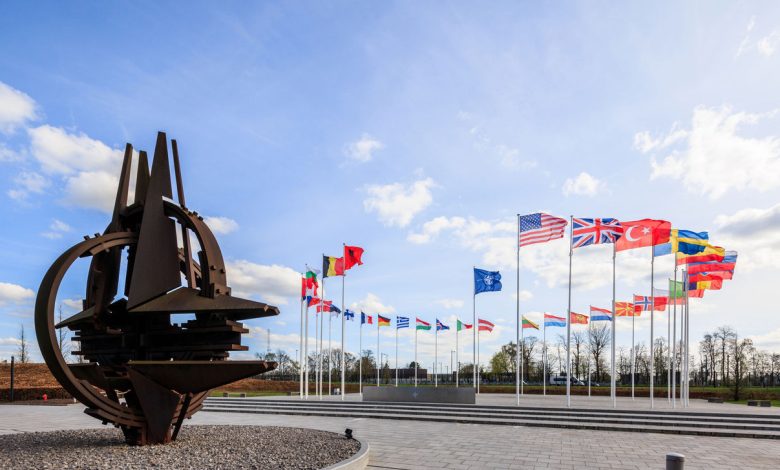
The Iran war did not break NATO. But it has accelerated a fracture that was already widening under the weight of repeated shocks. Before a single bomb fell on Tehran, the alliance had absorbed Trump’s public wavering on Article 5, his threats over Greenland, and Washington’s alignment with Moscow on key UN votes over Ukraine. The Iran campaign added a sixth shock to a pattern analysts say is becoming structural.
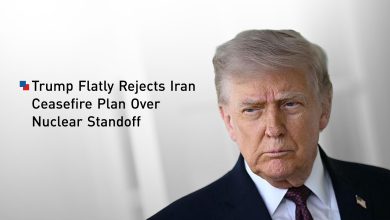
Trump launched military operations against Iran without consulting a single European NATO member. He did not seek their support, did not share intelligence, and did not ask for basing rights through normal channels. When European governments refused to endorse the campaign, he branded them cowards and warned that the United States would not defend them in a future crisis.
The political damage extends well beyond the immediate dispute. Even Italian Prime Minister Georgia Meloni, previously one of Trump’s most reliable European supporters, told the Italian parliament she was compelled to say openly when she disagreed with Washington. The centre is not holding.
🔴 Vector One
Consultation Collapsed Before the First Strike
NATO is built on the principle that allies consult before acting, particularly when their actions carry consequences for all members. Trump abandoned that principle entirely in the Iran campaign. The decision to strike was taken bilaterally with Israel, and European governments learned of it alongside the general public.
The consequences for European economies were immediate. Iran’s closure of the Strait of Hormuz sent gas prices surging across the continent, reigniting inflation fears that European policymakers had only recently brought under control. Analysts at the Council on Foreign Relations noted that the European Union was again forced to discuss emergency energy measures first deployed after Russia’s 2022 invasion of Ukraine.
Some European governments responded by unilaterally closing their airspaces and denying US landing rights. While domestically popular, those moves failed to advance European interests in any coordinated way and instead fuelled American accusations of betrayal, creating a vicious cycle that damaged the alliance further.
🟠 Vector Two
Russia’s Sanctions Relief — A Strategic Gift Wrapped in Inattention
While European attention was fixed on the Gulf, the Trump administration quietly relaxed sanctions on Russian oil and gas exports during the conflict period. The move was framed as a response to global energy pressures caused by the Hormuz closure. In practice it handed Moscow a significant financial windfall at precisely the moment when European pressure on Russia over Ukraine should have been at its strongest.
Carnegie Endowment analysts noted that by easing the economic squeeze on Moscow, Washington made it harder for European governments to sustain their own pressure on Russia. The unified Western posture that had defined the sanctions architecture since 2022 developed a visible crack. Russia exploited the opening diplomatically, with Foreign Minister Lavrov touring Beijing within days to consolidate ties.
There is also an unverified but widely reported claim that Russia offered to halt intelligence support for Iranian targeting of US forces in exchange for Washington reducing support for Ukrainian targeting operations. CLAIM UNVERIFIED. Washington reportedly declined. But the very fact that such an exchange was proposed reveals how completely Russia has linked the two theaters in its strategic calculus.
Carnegie Endowment for International Peace — April 2026
“The war has strengthened Russia’s hand, not least because Trump has relaxed some sanctions on its oil and gas exports, making it harder for Europe to increase the pressure on Moscow to end its war against Ukraine.”
🟠 Vector Three
The White House Blacklist and the Alliance Loyalty Test
Politico reported that the Trump administration compiled a ranking of NATO members based on their degree of support for US actions in Iran. Those deemed reliable allies would receive preferential treatment. Those deemed insufficiently supportive faced potential consequences including reduced troop presence and diminished intelligence cooperation. Secretary Hegseth was quoted indicating that allies who met US expectations would receive “special favor.”
The creation of such a ranking fundamentally alters NATO’s internal logic. The alliance operates on the premise of collective defense and mutual obligation. Transforming it into a rewards-and-punishment system based on adherence to US unilateral decisions corrodes the treaty’s foundational premise. Allies begin calculating compliance rather than committing to shared values.
This is precisely the dynamic Russia and China have sought to engineer for years. External pressure could not crack the alliance. Internal conditionality is proving far more effective.
🔵 Vector Four
China Fills the Diplomatic Vacuum
It was China that brokered the 14-day ceasefire between Washington and Tehran, working through Pakistan to bring the proposal to the table. The optics were stark: the United States, which entered the conflict to demonstrate strength, required a strategic rival to extract it from the impasse. Defense One analysts described the episode as a substantial soft-power gain for Beijing.
China’s brokering role is not an isolated event. Beijing has previously mediated between Iran and Saudi Arabia, and has positioned itself as a mediator in both the Russia-Ukraine and Israel-Palestine conflicts. Each successful intervention reinforces the Chinese narrative that the US-led international order has passed its peak and that a new architecture of global management is emerging around Beijing.
For NATO’s European members, the strategic implications are direct. If the United States is no longer the indispensable mediator of first resort, the alliance loses a core justification for the asymmetric sacrifices European members make to sustain Washington’s global reach.
🔴 Vector Five
Ukraine as Collateral Damage in a Two-Front Equation
The Iran war has accelerated a realignment in European security thinking that was already underway. Before the first strike, European governments were already funding Ukraine’s defence largely without American logistics leadership. The Iran conflict stripped away any remaining pretence that US priorities and European priorities were aligned.
Wall Street Journal reporting indicated that European officials were actively working to increase European representation in senior NATO positions and reduce dependence on American military hardware. Germany unveiled a new military strategy titled “Responsibility for Europe” in late April 2026, explicitly framing the Bundeswehr’s development in terms that do not assume sustained American leadership.
The core tension is this: the more the Iran war convinces European governments that US commitment to NATO is conditional, the more resources and political capital they will divert toward autonomous European defence structures. That diversion directly competes with continued support for Ukraine. Russia benefits from both outcomes.
Responsible Statecraft — April 2026
“The longer the Iran war goes on, the greater will be the pressure in Europe to cut a deal with Iran, especially if European establishments have come to believe that the NATO guarantee of U.S. military protection no longer holds.”
🟢 Europe’s Response
Leverage Exists. Whether It Will Be Used Coherently Is the Open Question.
Europe is not without tools. Its network of bases, logistics centres, and airfields is integral to American power projection globally. Ukraine’s drone expertise has proven directly valuable to US air defence operations in the Gulf. The CFR’s Liana Fix argued that European governments should leverage these assets in a coordinated way rather than through unilateral and largely symbolic airspace closures that harden US resentment without advancing European interests.
The structural problem is coherence. European governments have different energy exposures, different political pressures, and different threat perceptions from Russia. Agreement on a unified position is difficult when some members face acute economic pain from Hormuz and others prioritise deterrence against Moscow above all else. Russia benefits directly from that fragmentation.
NATO Secretary-General Mark Rutte travelled to Washington during the conflict in an attempt to manage tensions over European non-involvement. The visit produced no visible shift in American posture. Whether the ceasefire creates space for a genuine recalibration of alliance relations remains to be seen.
Strategy Battles Assessment
The Iran war’s most significant strategic consequence may not be what happened in the Gulf. It may be what happened inside NATO. Russia has spent fifteen years looking for a wedge that would fracture transatlantic unity without requiring direct military action against a member state. The Iran campaign handed Moscow that wedge for free.
The critical variable now is the ceasefire’s durability. If the 14-day pause extends into a settled arrangement, European governments may find breathing room to re-engage Washington on alliance terms. But if the conflict reignites, European energy exposure will grow, political patience will expire, and the autonomous-defence trajectory will accelerate far faster than current planning timelines assume. The Kremlin’s ideal outcome is not NATO’s formal dissolution. It is a NATO that functions as a framework without a shared strategic purpose, where members comply with collective obligations selectively and American security guarantees become explicitly conditional. The Iran war has moved the alliance meaningfully toward that condition.
Strategy Battles — Related Coverage
- Politico Europe — “5 Ways the Iran War Has Exposed NATO’s Weakness,” April 2026
- Carnegie Endowment for International Peace — “Taking the Pulse: Can NATO Survive the Iran War?” April 2026
- Council on Foreign Relations — “Europe Has Leverage in the Iran War. It Should Use It,” April 7, 2026
- Defense One — “4 Ways the War in Iran Has Weakened the US in the Great Power Game,” April 2026
- Washington Monthly — “The U.S.-Europe Rift: How Trump’s Iran War Is Making It Worse,” April 16, 2026
- Responsible Statecraft — “Is the Iran War Breaking NATO Forever?” April 2026
- War on the Rocks — “Punish Russia for Helping Iran Target the U.S. Military,” 2026
Editorial Verification
The core findings in this article are corroborated across multiple independent sources including the Council on Foreign Relations, Carnegie Endowment, Defense One, and Responsible Statecraft. The Politico Europe article that prompted this piece was not directly accessible for verification but its contents are reflected in corroborating sources and secondary reporting. The claim that Russia offered to halt targeting support for Iran in exchange for reduced US support for Ukrainian targeting is single-source (War on the Rocks citing Politico) and is labelled CLAIM UNVERIFIED. The Hegseth quote on NATO “good and bad” lists is sourced from Politico via secondary reporting and is consistent with broader White House posture. The 14-day ceasefire figure and China’s brokering role are confirmed across multiple outlets.
Approved for Publication
Marcus V. Thorne
Lead Editor, Strategy Battles
©StrategyBattles.net 2026
This article is for news and analysis purposes only. Based on publicly available news sources and military updates. All rights reserved. Not for commercial reuse without permission.