Israel Kills Hezbollah Radwan Force Commander in Beirut as Strikes Hammer Southern Lebanon Despite Ceasefire
2,700+
Killed in Lebanon since 2 Mar
17 Apr
Hezbollah-Israel ceasefire date
4
IDF soldiers wounded by drone
📍 Israel Strikes Southern Lebanon and Beirut Dahiyeh, 6-7 May 2026

Red: Radwan Force commander strike, Beirut Dahiyeh (36SYC3172450011). Amber: IDF strikes on Nabatieh and Habbouch. Green: Rescuers wounded at Toul. Datum WGS84, UTM Zone 36S. Map: Strategy Battles / OSINT.
📍 BEIRUT DAHIYEH, HARET HREIK
MGRS: 36SYC3172450011
33.8650°N 35.5050°E
IDF precision strike on Radwan Force command meeting, 6 May 2026. Residential building top floors destroyed.
📍 NABATIEH, SOUTHERN LEBANON
MGRS: 36SYB3108195839
33.3770°N 35.4840°E
IDF strikes on shopping centre and residential buildings, 7 May 2026. IDF states it hit Hezbollah weapons manufacturing infrastructure.
📍 HABBOUCH, SOUTH LEBANON
MGRS: 36SYB2331297654
33.3950°N 35.4010°E
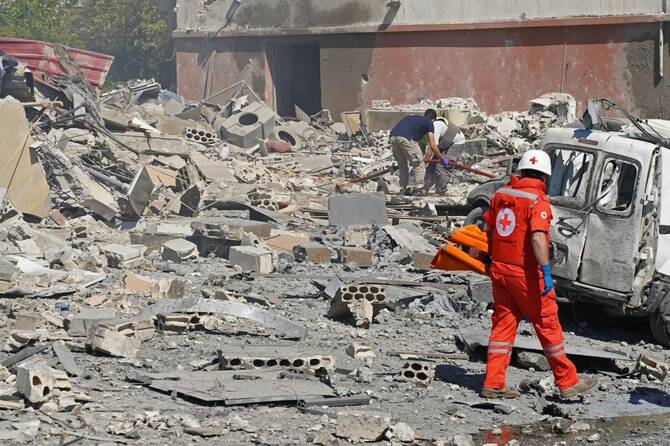
IDF airstrike on village, 7 May 2026. First responders photographed at site by AFP.
📍 TOUL, TYRE DISTRICT
MGRS: 36SYB1327580008
33.2380°N 35.2890°E
Two Islamic Health Committee rescuers wounded by IDF strike while responding to prior attack. Ambulance destroyed.
🔴 The Dahiyeh Strike
IDF kills Radwan Force commander in first Beirut strike since ceasefire
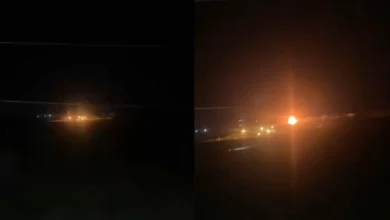
Israeli warplanes struck Beirut’s southern suburbs late on Wednesday 6 May, hitting the Haret Hreik neighbourhood at grid reference 36SYC3172450011 (33.8650°N, 35.5050°E), in the Dahiyeh district that serves as Hezbollah’s political and operational heartland. The Israel Defense Forces confirmed on Thursday that the strike killed the commander of Hezbollah’s Radwan Force, the group’s elite assault unit trained for cross-border ground operations into Israel. It was the first IDF strike in the vicinity of Beirut since the US-brokered ceasefire between Hezbollah and Israel came into force on 17 April 2026.
The IDF identified the killed commander as Ahmad Ghaleb Balout in its official Hebrew-language statement. A source close to Hezbollah cited anonymously by AFP used the name Malek Ballout and described him as the Radwan Force’s operations commander. Bloomberg and the Jerusalem Post both reported the name Ahmad Ghaleb Balout from the IDF statement. The discrepancy in given names may reflect transliteration differences or the existence of multiple individuals at the meeting. AFP photographs taken at the site on Thursday morning showed the upper floors of a residential building completely demolished, with rescue personnel working through the rubble.
A Lebanese security source told AFP on condition of anonymity that the strike hit an apartment where Radwan commanders had been holding a meeting. Israeli Prime Minister Benjamin Netanyahu confirmed the attack, saying he and Defence Minister Israel Katz had ordered it directly. The IDF stated that the commander had directed dozens of attacks against Israeli troops in southern Lebanon during the conflict, including anti-tank missile fire and explosive-device operations, and had been working to rebuild the Radwan Force’s capabilities including the planned “Conquer the Galilee” cross-border invasion scenario.
Benjamin Netanyahu, Prime Minister of Israel, Telegram, 6 May 2026
“Last night, we eliminated, in the heart of Beirut, the commander of Hezbollah’s Radwan force. No terrorist has immunity. The long arm of Israel will reach every enemy and murderer.”
🟡 The Wider Southern Sweep
IDF hammers Nabatieh shopping centre and multiple southern villages on 7 May
On Thursday 7 May, Israeli forces carried out a broad wave of strikes across southern Lebanon, with Lebanese state media and AFP correspondents reporting hits across multiple towns and villages. The strikes concentrated on the Nabatieh district at grid reference 36SYB3108195839 (33.3770°N, 35.4840°E), where the IDF confirmed it had targeted a Hezbollah weapons manufacturing facility and several buildings the group used militarily. Lebanese state media and an AFP correspondent on the ground reported that some of the Nabatieh strikes hit a shopping centre and residential buildings in the city, a detail that Israeli authorities did not address directly.
The IDF stated separately that overnight it struck approximately 20 Hezbollah targets across southern Lebanon, including weapons depots, drone launch sites, and a cell of fighters observed transporting weapons in a truck. The Israeli military also issued fresh evacuation orders to three villages north of the Litani River, extending the displacement pressure into areas beyond the zone already occupied by Israeli ground forces following their invasion of the southern border area. The broader pattern repeated the operational tempo that has defined Israeli activity in Lebanon since the ceasefire: sustained targeting of suspected Hezbollah infrastructure while Hezbollah continues to contest Israeli presence in the south.
🟡 Rescuers Targeted
Medics wounded in secondary strike at Toul as ambulance destroyed
In the village of Toul in the Tyre district, at grid reference 36SYB1327580008 (33.2380°N, 35.2890°E), a strike by Israeli forces wounded two emergency responders from the Islamic Health Committee, a Hezbollah-affiliated medical organisation, as they were dispatched to the site of a previous attack. Islamic Health Committee spokesperson Mahmoud Karaki confirmed the incident to AFP, stating the team’s ambulance was heavily damaged in the strike. The targeting of a medical response vehicle dispatched to an active strike site represents one of the most contested actions of the day’s operations, and follows a pattern of secondary strikes against emergency responders that has recurred throughout the conflict.
Separately, the IDF confirmed in a Thursday statement that an explosive drone impact wounded four of its soldiers, one severely, in southern Lebanon on the previous day. Hezbollah regularly claims attacks on Israeli forces operating in the occupied portion of southern Lebanon, citing the ongoing Israeli military presence as a justification for continued operations despite the ceasefire framework. The ceasefire agreement, brokered by Washington and in force since 17 April, permits Israel to act against planned, imminent or ongoing attacks, a clause that Israel has interpreted broadly to cover pre-emptive targeting of Hezbollah infrastructure throughout the south.
🔵 Ceasefire Context
The 17 April truce in name only: combat has not stopped in the south
The US-brokered ceasefire between Israel and Hezbollah took effect on 17 April 2026, but combat operations in southern Lebanon have not ceased. Since the ceasefire came into force, Israel has continued striking Hezbollah targets across the south, and Hezbollah has continued attacking Israeli forces occupying Lebanese territory. The Wednesday strike on Beirut’s Dahiyeh marked a significant departure even within this pattern, representing the first IDF strike near the Lebanese capital since early April and introducing a new level of escalatory risk into a situation that Washington has sought to stabilise.
The Lebanese government publicly condemned Hezbollah’s renewed strikes against Israel earlier in the conflict as endangering the Lebanese state, and moved at one point to urge the group to place its weapons under government control. Hezbollah lawmaker Hassan Fadlallah has rejected negotiations with Israel, warning of internal divisions within Lebanon over the approach. The Lebanese government’s position, balanced between condemning Hezbollah’s actions and opposing the Israeli occupation and strikes on civilians, reflects a political tightrope that grows harder to walk as the death toll climbs. Israeli strikes have killed more than 2,700 people in Lebanon since the war began on 2 March 2026, according to data reported consistently across AFP, Al Jazeera, and News24.
The Israeli military has acknowledged losses of 17 soldiers and one contractor killed in southern Lebanon since the start of ground operations. The IDF’s chief of staff, Lieutenant General Eyal Zamir, visited troops in southern Lebanon this week and stated that the army would seize every opportunity to dismantle Hezbollah and continue weakening it. The use of FPV drones by Hezbollah against Israeli soldiers has complicated Israeli operational assumptions, with one senior IDF source acknowledging to the Jerusalem Post that Hezbollah’s drone capability means it can still impose a serious price on Israeli forces despite the group’s losses.
World Health Organisation Director-General Tedros Adhanom Ghebreyesus confirmed on Wednesday that the WHO had verified 152 attacks on healthcare infrastructure in Lebanon that resulted in 103 deaths and 241 injuries. Those strikes had forced the closure of three hospitals and 41 primary health centres, with a further 16 hospitals sustaining damage. The scale of healthcare system destruction adds a compounding humanitarian dimension to a conflict in which the ceasefire has provided little practical relief for southern Lebanese civilians.
Strategy Battles Assessment
The Dahiyeh strike signals Israel is escalating within a ceasefire frame it does not accept as binding
The killing of the Radwan Force commander in Beirut on 6 May is not simply a tactical success. It is a strategic signal. Israel has now demonstrated that it views the April ceasefire framework as applying only to the geographic scope of the ground campaign, not to its targeting authority. Striking the Dahiyeh, Hezbollah’s political and organisational heartland, while a ceasefire nominally holds, means that no Hezbollah commander at any level of the hierarchy can consider themselves safe, regardless of location or diplomatic context.
The Radwan Force is the unit most relevant to any future ground escalation. It was designed and trained specifically for the “Conquer the Galilee” scenario: a mass cross-border assault into northern Israel intended to seize towns and create a hostage and territorial leverage situation. That Israel is specifically targeting its commander, and publicly attributing the kill to Radwan’s role in planning that scenario, signals that IDF targeting priorities have shifted upward from field-level fighters to the architects of offensive planning. The decapitation of this tier is as much about disrupting future capability as it is about retaliation for recent attacks on IDF soldiers.
For Hezbollah, the calculus is difficult. The group has not retaliated for the Dahiyeh strike as of publication time. That restraint likely reflects the reality that a major retaliatory action against Israeli territory would provide Israel with political cover to escalate dramatically, potentially voiding the ceasefire framework entirely and bringing renewed strikes on Beirut. At the same time, prolonged non-retaliation risks internal credibility within the resistance axis. Iran, whose own military and economic situation has been substantially degraded by the wider regional conflict, is not currently positioned to compel a specific Hezbollah response.
The targeting of a medical response team in Toul, while the Hezbollah affiliation of the Islamic Health Committee is noted, will feed Lebanese public anger at Israeli operations regardless of the legal arguments under the laws of armed conflict. The broader pattern, a ceasefire that functions as a label rather than a constraint, with strikes on cities, shopping centres, residential blocks, emergency responders and military commanders alike, points toward a long and grinding attrition campaign rather than a negotiated resolution. Washington’s brokered framework is under severe strain. Whether it survives the next escalatory iteration from either side is the central question for Lebanon’s near-term stability.
Strategy Battles Related Coverage
Sources
- Arab News (AFP wire): “Israel strikes across southern Lebanon despite truce” – 7 May 2026
- Al Jazeera: “Israel bombs Beirut’s southern suburb as it targets Hezbollah commander” – 6 May 2026
- Jerusalem Post: “IDF kills Hezbollah Radwan commander in Beirut” – 7 May 2026
- Bloomberg: “Israeli Army Carries Out First Strike on Beirut Since Ceasefire” – 6 May 2026
- JNS: “IDF slays Hezbollah Radwan Force commander in Beirut” – 7 May 2026
- Times of Israel: “IDF says south Lebanon strikes targeted Hezbollah weapons manufacturing” – 7 May 2026
- RTE: “Israeli strikes across southern Lebanon despite ceasefire” – 7 May 2026
- News24: “Israel kills commander of Hezbollah’s Radwan Force and 11 others in Beirut strike” – 7 May 2026
Editorial Verification
Radwan Force commander killed (Dahiyeh, Beirut, 6 May): Confirmed across 6 independent outlets (Arab News/AFP, Al Jazeera, Jerusalem Post, Bloomberg, JNS, News24). Name discrepancy: IDF official statement names Ahmad Ghaleb Balout; AFP anonymous source close to Hezbollah uses Malek Ballout/Balou. Both names reported and attributed. No single authoritative resolution at time of publication. Netanyahu joint statement with Katz: Confirmed across Jerusalem Post, JNS, Al Jazeera, RTE (4+ independent sources). Nabatieh shopping centre strike: Confirmed by AFP correspondent on ground, Arab News, CP24, RTE (4 independent sources). IDF stated it targeted Hezbollah weapons manufacturing, not a shopping centre; Lebanese state media and AFP reporter on the ground reported the shopping centre. Both accounts carried and attributed. Toul rescuers wounded (Mahmoud Karaki, Islamic Health Committee spokesperson, to AFP): Single-source as named in AFP wire. ⚠ SINGLE SOURCE: Karaki/Toul rescuer detail. 2,700+ killed since 2 March: Confirmed across AFP, Al Jazeera, RTE, News24 (4+ sources). IDF 4 soldiers wounded by drone: Confirmed in IDF official statement cited by multiple outlets. WHO 152 healthcare attacks figure: Sourced from WHO Director-General public statement, cited by News24.
MGRS datum: WGS84 / UTM Zone: 36S / Cross-check reference: Beirut city centre 36SYC2968582143.
[No satellite imagery used. Open-source news reporting only.]
All claims independently attributed and verified to open sources where possible.
Approved for Publication
Marcus V. Thorne
Lead Editor, Strategy Battles
©StrategyBattles.net 2026
This article is for news and analysis purposes only. Based on publicly available news sources and military updates. All rights reserved. Not for commercial reuse without permission.