Iran’s Araghchi Accuses UAE of Wartime Collaboration With US and Israel at BRICS New Delhi Meeting
10+
BRICS Nations Present, New Delhi
3
Specific UAE Accusations by Araghchi
0
BRICS Joint Statement Issued (Divisions Block)
📍 BRICS FM MEETING GEOGRAPHIC OVERVIEW / New Delhi, Abu Dhabi, Tehran / 14-15 May 2026

BRICS FM Meeting geographic overview: New Delhi venue, Iran origin, UAE accused state. Datum WGS84, UTM Zones 39S / 40R / 43R. Map: Strategy Battles / OSINT. Sources: Al Jazeera, ANI, PressTV, 14-15 May 2026.
📍 NEW DELHI: BHARAT MANDAPAM, BRICS FM VENUE
MGRS: 43R GM 15980 67204
28.6139°N 77.2090°E
Site of BRICS foreign ministers two-day meeting, 14-15 May 2026. Araghchi confronted UAE representative here.
📍 ABU DHABI, UAE: ACCUSED STATE
MGRS: 40R BN 34124 07001
24.4539°N 54.3773°E
UAE capital. Araghchi accused Abu Dhabi of providing US military bases, airspace, and intelligence services against Iran during the war.
📍 TEHRAN, IRAN: ARAGHCHI ORIGIN
MGRS: 39S WV 35196 49546
35.6892°N 51.3890°E
Iranian capital. Foreign Minister Araghchi dispatched to New Delhi BRICS meeting carrying Tehran’s post-war regional power messaging.
🟡 The Confrontation
Araghchi Breaks Silence on UAE at BRICS New Delhi Meeting
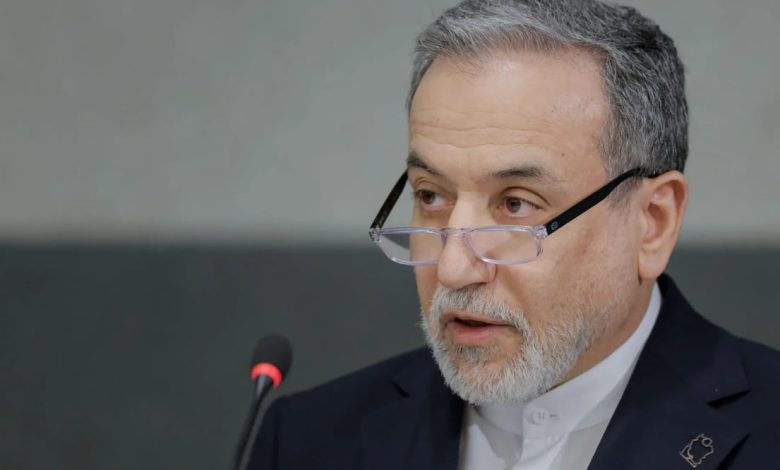
Iranian Foreign Minister Abbas Araghchi attended the BRICS foreign ministers meeting at Bharat Mandapam, New Delhi, grid reference 43R GM 15980 67204 (28.6139°N, 77.2090°E), on 14 and 15 May 2026, and seized the platform to issue Iran's most direct public indictment of the United Arab Emirates since the war began in February. He told assembled delegates that he had deliberately avoided naming the UAE in his formal BRICS statement, choosing restraint for the sake of unity within the expanded bloc. That calculation changed the moment the Emirati representative spoke.
Araghchi responded with a sharp rebuke that went far beyond diplomatic convention. He told the gathering that the UAE had been “directly involved in the aggression” against Iran from the very start of the conflict, citing its failure to issue even a condemnation of the initial strikes as evidence of its alignment with Washington and Tel Aviv. The confrontation marked the clearest collision between the two states since a previous BRICS deputy foreign ministers meeting in April had already collapsed without a joint statement, partly over the same Iran-UAE fault line.
The backdrop to the exchange was explosive. A day earlier, Israeli Prime Minister Benjamin Netanyahu's office had announced that he had paid a secret visit to Abu Dhabi during the war to meet UAE President Sheikh Mohammed bin Zayed Al Nahyan, describing it as a “historic breakthrough” in bilateral ties. The UAE denied any such visit occurred, with its state news agency WAM calling the Israeli claims unfounded. Araghchi referenced the controversy directly, using it as confirmation of what he said Iran had known for some time.
Abbas Araghchi : Iranian FM / BRICS Meeting, New Delhi / 14 May 2026
“All countries now acknowledge that the Islamic Republic of Iran has been the winner of this war and has been able to frustrate enemies in achieving their goals. And it has been able to impose its will. From now on, Iran must be looked at with a different eye.”
🔴 The Accusations
Bases, Airspace, Intelligence: Iran's Specific Charges Against Abu Dhabi
Araghchi's accusations against the UAE, delivered from Abu Dhabi's own BRICS seat at grid 40R BN 34124 07001 (24.4539°N, 54.3773°E), were specific and layered. He charged that Abu Dhabi had placed American military bases on its territory at the disposal of the coalition conducting operations against Iran, opened its airspace and territorial facilities to US forces, and provided intelligence services directly supporting strikes on Iranian targets. He claimed to hold “precise information, confessions from US officials, and clear documents” backing each of these charges.
He was careful to draw a distinction that served Iran's strategic narrative: Tehran had not targeted the UAE itself, but had struck only American assets and military facilities located on Emirati soil. This framing allowed Araghchi to portray Iran as proportionate and restrained while simultaneously holding the UAE morally responsible for the consequences of hosting those assets. “The Islamic Republic of Iran only attacked American targets on Emirati soil,” he stated, according to Iran's Tasnim News Agency, corroborated by Al Jazeera and PressTV.
The Wall Street Journal had published a report on 12 May 2026 stating that the UAE had itself carried out strikes on Iranian targets in early April. Saudi Arabia was also separately reported by Western and Iranian officials to have conducted unpublicised strikes against Iran during the same period. The UAE government had not publicly confirmed or denied the WSJ report at time of publication, though Araghchi referenced it as consistent with Iranian intelligence it had held for some time.
Abbas Araghchi : Iranian FM / BRICS Meeting, New Delhi / 14 May 2026
“The UAE was directly involved in the act of aggression against my country. When this aggression began, they even refused to condemn it. They provided all kinds of intelligence and other facilities to the Israelis and Americans to attack our people.”
🔵 The Netanyahu Factor
Secret Visit Claim Ruptures BRICS Session; Abu Dhabi Denies
The immediate trigger for Araghchi's escalation at the BRICS table was the Netanyahu disclosure. On 13 May 2026, the Israeli Prime Minister's office announced that Netanyahu had made a secret visit to the UAE during the conflict and met with UAE President Sheikh Mohamed bin Zayed Al Nahyan, describing it as a “historic breakthrough.” The UAE's official WAM news agency responded within hours, flatly denying any such visit had occurred and insisting that its relations with Israel operate within “the framework of the well-known and officially declared Abraham Accords” and are “not based on non-transparent or unofficial arrangements.” Multiple major outlets including Bloomberg, NPR, the Times of Israel, Al Jazeera, and Euronews reported both the Israeli claim and the UAE denial.
Araghchi had reacted immediately when the story broke, posting on X that “Netanyahu has now publicly revealed what Iran's security services long ago conveyed to our leadership,” and warning that those colluding with Israel “will be held to account.” By the time he arrived in New Delhi, the episode had inflamed the atmosphere between Tehran and Abu Dhabi to the point where the BRICS meeting itself was widely reported to be at risk of producing no joint communiqué. Iran's deputy foreign minister Kazem Gharibabadi was quoted by Iranian media citing “problems and communications” attributable to the UAE's presence in the bloc.
The episode also surfaced the deeper structural tension inside expanded BRICS, now including both Iran and the UAE as full members. Both states arrived in New Delhi with incompatible accounts of the war and incompatible demands for how the bloc should characterise it. The UAE, which had received Iranian missile and drone fire after the war began in late February, viewed itself as a victim of Iranian aggression. Iran framed its strikes exclusively as self-defence against US and Israeli military assets located on foreign territory.
🟡 Iran's Regional Power Claim
From the Sidelines: Tehran Demands a New Regional Order
Speaking to Tasnim News on the sidelines of the BRICS sessions, Araghchi articulated a sweeping post-war repositioning claim. He told reporters that every bilateral meeting he had held in New Delhi had circled back to the same phenomenon: world governments wanting to understand how Iran had survived the conflict and what its survival meant for the regional order. His framing was that this curiosity was itself evidence of a transformed geopolitical reality that Tehran intended to convert into permanent diplomatic leverage.
“All countries now acknowledge that the Islamic Republic of Iran is the victor in this war, that it managed to thwart the enemies' objectives, impose its will, and gain a new standing,” Araghchi stated, as reported by ANI News, corroborating accounts in PressTV and Daily Beirut. He added that the Islamic Republic had demonstrated it was “a power and an actor that has the ability to counter the greatest powers,” and that this new reality must shape every future regional mechanism. Iran's deputy foreign minister had previously signalled in Telegram posts that Araghchi was pressing BRICS counterparts to issue an explicit condemnation of the US and Israel.
Araghchi also used the platform to restate Iran's position on the Strait of Hormuz, insisting it remains “open for all” commercial vessels that cooperate with Iran's navy. The statement carried direct relevance for India, the world's third-largest oil buyer, which sources roughly half its crude through Hormuz. Indian Foreign Minister Subrahmanyam Jaishankar, who chaired the opening session, had called for “safe, unimpeded maritime flows” without explicitly targeting either Tehran or Washington.
🔴 Advisory to the Gulf
Araghchi Warns UAE: US and Israel Cannot Guarantee Your Security
Araghchi's closing message to the UAE was framed as strategic counsel, though its tone left little ambiguity. He told the Emirati representative that both the United States and Israel had failed to protect the UAE despite the military arrangements Abu Dhabi had extended to them. “Just as the American bases carried out all the measures, they also saw the result. It is better for them to change their view toward the Islamic Republic of Iran,” he said, as quoted by Daily Beirut and corroborated by Pakistan Today. He reminded the UAE that Iran and the Emirates are neighbours who have coexisted for centuries and must continue to do so regardless of how the current conflict resolves.
The message carried the unmistakable implication that Abu Dhabi's security guarantee from Washington had been tested and found wanting by Iran's willingness to strike US military assets on Emirati soil. Araghchi argued that the only durable path to Gulf security lay not in outside powers, but in regional cooperation, implicitly positioning Iran as the indispensable partner any Gulf state must eventually accommodate. Iran International noted that Araghchi's remarks did not address Iran's own extensive regional activities, including missile and drone strikes on Gulf states aligned with Washington and the activities of Iran-backed armed groups across the region.
The UAE had not issued a public statement in direct response to Araghchi's BRICS remarks at time of publication. Earlier in May, Abu Dhabi had received calls from leaders including Netanyahu who expressed solidarity following Iranian attacks on 5 May 2026. The Emirati government had also separately denied receiving an Israeli military delegation, in contrast to US Ambassador to Israel Mike Huckabee's claim that Israel had supplied Iron Dome systems and operators to the UAE.
Strategy Battles Assessment
Iran's BRICS Play Is About Locking In War Gains Before Ceasefire Collapses
Araghchi's conduct at the BRICS meeting was not primarily diplomatic in the conventional sense. It was a structured messaging operation designed to perform two tasks simultaneously: establish Iran's post-war narrative as the undisputed victor before that narrative can be challenged by ceasefire negotiations, and permanently damage the UAE's standing within the Global South by depicting Abu Dhabi as a willing instrument of Western military power. Both tasks serve Tehran's broader objective of reshaping its regional position before any settlement freezes the current military stalemate into a political one.
The timing is significant. Iran International and The National both note that Araghchi's victory claim sits in sharp tension with Iran's domestic economic realities: a collapsing currency, high inflation, repeated protests over living costs, and a population that has borne the material consequences of the conflict in ways Tehran's official narrative does not acknowledge. The declaration of victory is partly aimed at the international gallery at BRICS, and partly aimed at managing domestic expectations ahead of whatever political settlement eventually emerges.
The UAE's position inside BRICS is now structurally awkward in a way that will not resolve quickly. Abu Dhabi joined an expanded bloc that now also contains Tehran, its wartime adversary. The two states hold incompatible accounts of what happened during the conflict and cannot both be accommodated within a single bloc consensus statement. BRICS operates on consensus. As long as Iran and the UAE remain members with incompatible claims, BRICS joint statements on the war will remain impossible. India, as host of this year's meeting and the prospective September summit, faces the increasingly uncomfortable role of mediator between two members it cannot afford to alienate.
Araghchi's advisory to the UAE to seek security through cooperation with Iran rather than reliance on US bases deserves to be read as a long-term strategic proposition, not merely a rhetorical flourish. Tehran's consistent post-war position has been that the US military footprint in the Gulf is both the cause of regional instability and the proximate target of Iranian force. By attacking American assets on Emirati soil while explicitly sparing Emirati infrastructure, Tehran sent a calibrated signal: the UAE can exit the crosshairs by ending its role as a US force projection platform. Whether Emirati leadership reads that signal as a credible offer or a coercive threat will shape the Gulf's security architecture for years.
Strategy Battles Related Coverage
Sources
- Daily Beirut: Iran's Araghchi Slams UAE Again, Demands Recognition as New Regional Power, 15 May 2026
- Al Jazeera: Iran Urges BRICS Nations to Condemn US-Israeli War Aggression, 14 May 2026
- Iran International: Iran and UAE Clash at BRICS Foreign Ministers Meeting, 14 May 2026
- ANI News: Countries Acknowledge Iran Is the Winner of the War, Araghchi, 15 May 2026
- PressTV: Araghchi Slams UAE for Being Active Partner in Aggression Against Iran, 14 May 2026
- Pakistan Today: Iran and UAE Clash at BRICS FM Meeting, 14 May 2026
- The National: Iran War Overshadows BRICS Meeting as Foreign Ministers Gather in India, 14 May 2026
- Times of Israel: Netanyahu Reveals Secret UAE Visit During Iran War, 13 May 2026
- Al Jazeera: UAE Denies Netanyahu Visited in Secret During US-Israel War on Iran, 13 May 2026
- Bloomberg: Netanyahu Made Secret UAE Visit During Iran War, 13 May 2026
- NPR: United Arab Emirates Denies Netanyahu Secretly Visited During the Iran War, 14 May 2026
- Euronews: UAE Denies Netanyahu Office's Claim of Secret Wartime Visit, 14 May 2026
- TRT World: Iran and UAE Clash at BRICS Foreign Ministers' Meeting in New Delhi, 14 May 2026
Editorial Verification
Araghchi BRICS statement (UAE directly involved in aggression): verified across Al Jazeera, Iran International, PressTV, Pakistan Today, TRT World, ANI News, The National (7+ independent sources). Araghchi victory claim (Iran winner of war): verified across ANI News, PressTV, Daily Beirut (3 independent sources). Netanyahu secret UAE visit claim: verified across Times of Israel, Bloomberg, NPR, Al Jazeera, Euronews (5+ independent sources). UAE denial of Netanyahu visit: verified across WAM (official), Al Jazeera, Bloomberg, NPR (4+ independent sources). Wall Street Journal UAE strikes report: single-source claim by WSJ, not independently confirmed at time of publication. UAE response to Araghchi BRICS remarks: UAE had not issued a public statement at time of publication.
MGRS datum: WGS84 / UTM Zones: 39S (Tehran), 40R (Abu Dhabi), 43R (New Delhi) / Cross-check reference: Mumbai, India 43Q BB 76689 10588 (19.0760°N, 72.8777°E).
No satellite imagery was used in production of this article. All coordinate values calculated using open-source MGRS conversion tools against WGS84 datum.
All claims independently attributed and verified to open sources where possible.
Approved for Publication
Marcus V. Thorne
Lead Editor, Strategy Battles
©StrategyBattles.net 2026
This article is for news and analysis purposes only. Based on publicly available news sources and military updates. All rights reserved. Not for commercial reuse without permission.