RAF Typhoon and NATO Intercept Russian Bombers Baltic 2026 Six Nations Scramble as Britain Announces 120,000 Ukraine Drones
12
Aircraft in Russian Formation
(2 Tu-22M3 + ~10 Fighters)
6
NATO Nations Scrambled
Sweden, Finland, Poland, Denmark, Romania, France
120k
UK Drones Pledged to Ukraine
Largest Package in War History
📍 Baltic Sea — NATO Intercept of Russian Tu-22M3 Formation / RAF Deployment at Amari, April 20, 2026

Russian formation (2x Tu-22M3 + ~10x Su-30/Su-35) flew a 4-hour arc over neutral Baltic waters. Six NATO nations scrambled including RAF Typhoons from Amari AB, Estonia. Map: Strategy Battles / OSINT.
🔴 The Formation
Russia’s Biggest Baltic Show in Months: Bombers, a Full Fighter Screen and Four Hours Over Neutral Water
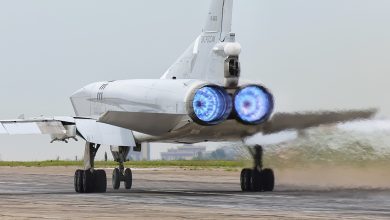
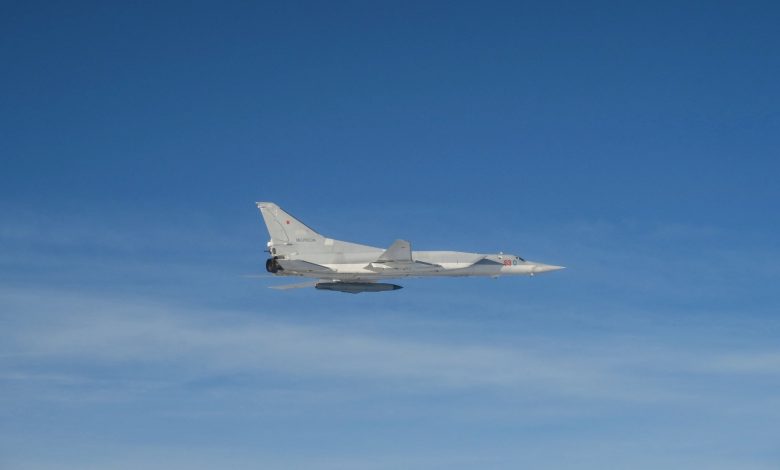
On Monday, April 20, NATO fighters from six Alliance countries were scrambled to intercept a significant Russian air formation over the Baltic Sea. According to French military officials based in Lithuania under NATO’s Baltic Air Policing mission, the Russian flight involved two Tu-22M3 strategic bombers, NATO designation “Backfire,” escorted by approximately ten Su-30 and Su-35 fighters. The formation flew for more than four hours over neutral waters.
Nations that scrambled fighters in response included Sweden, Finland, Poland, Denmark, Romania and France, with French Rafales from the Lithuania-based Baltic Air Policing detachment at Siauliai among those that rose to intercept. The Russian Ministry of Defence confirmed the flight was planned and stated it complied with international rules for flight over neutral waters. It did not respond to requests for comment on the specific encounter with NATO jets.
🔵 RAF at Amari
British Typhoons at the Sharp End: Quick Reaction Alert from Estonia
RAF Typhoon fighters from 1 (Fighter) Squadron, based at RAF Lossiemouth and currently deployed to Amari Air Base in Estonia, have been providing Quick Reaction Alert capability under NATO’s Baltic Air Policing mission since March 2026. The 100-strong 140 Expeditionary Air Wing supports the Typhoon detachment, holding the jets at constant readiness to get airborne at a moment’s notice. Alongside the RAF at Amari, the Portuguese and Romanian Air Forces operate from Siauliai Air Base in Lithuania, providing the southern Baltic coverage that complemented the April 20 intercept.
NATO and its member air forces note a consistent pattern with Russian formations of this kind: the aircraft do not use transponders, do not contact air traffic control and do not file flight plans. That behaviour forces Alliance nations to scramble regardless of the stated purpose of the flight, because any unidentified aircraft in a major civil aviation corridor represents a flight safety hazard as well as a potential military threat. NATO intercepts Russian aircraft approximately 300 times per year, with activity rising sharply since the full-scale invasion of Ukraine in 2022.
🟢 The UK Drone Package
Britain Announces 120,000 Drones for Ukraine: The Largest Such Package in the History of the War
Five days before the Baltic intercept, on April 15, the UK government announced what it described as the largest drone package ever supplied to Ukraine: at least 120,000 drones to be delivered across 2026. The announcement coincided with Defence Secretary John Healey co-chairing the 34th meeting of the 50-nation Ukraine Defence Contact Group in Berlin alongside German Defence Minister Boris Pistorius, Ukrainian Defence Minister Mykhailo Fedorov and NATO Secretary General Mark Rutte.
The package spans long-range strike drones, intelligence and reconnaissance systems, logistics drones and maritime capabilities, all drawn from types already proven on Ukraine’s frontline. The majority of funding flows to UK-based companies, including Tekever, Windracers and Malloy Aeronautics. The announcement forms part of the UK’s broader three-billion-pound military support commitment to Ukraine in 2026, which also includes hundreds of thousands of artillery rounds and thousands of air defence missiles. Russia launched approximately 6,500 one-way attack drones against Ukraine in March 2026 alone, a sharp increase on the preceding month.
UK Defence Secretary John Healey — April 15, 2026
“With eyes on the Middle East in recent weeks, Putin wants us to be distracted. But Ukrainians continue to fight with huge courage and nothing will distract us from continuing to stand with them for as long as it takes to secure peace.”
🟡 Baltic Context
Kaliningrad, Eastern Flank Tension and the Anatomy of a Russian Provocation
The Baltic Sea has become one of NATO’s most consistently tested spaces. The region borders Russia and Kaliningrad, Moscow’s heavily militarised exclave sandwiched between Poland and Lithuania, and many of the Russian formations intercepted by Alliance fighters are transiting to or from that enclave. NATO’s Baltic Air Policing mission, established at Amari and Siauliai in 2014 following Russia’s illegal annexation of Crimea, rotates Alliance nations through four-month deployments to provide coverage for Estonia, Latvia and Lithuania, which lack organic air policing assets of their own.
Sweden and Finland’s full integration into NATO’s Baltic Air Policing following their accession to the Alliance has substantially deepened coverage across the northern Baltic and Gulf of Finland. Their presence in the April 20 response is visible evidence that NATO’s eastern flank is materially stronger than it was before 2022. The Kaliningrad corridor and its approaches remain the sharpest point of daily contact between Russian and NATO airspace, with Alliance fighters regularly rising to shadow aircraft that refuse standard procedures.
🔴 Russia’s Threat Warning
Moscow Warns Baltic NATO Members Over Ukrainian Drone Corridors
The April 20 formation flight came against a backdrop of rising Russian hostility toward the Baltic states over the issue of Ukrainian attack drones. Russian Foreign Ministry spokeswoman Maria Zakharova had warned Estonia, Latvia and Lithuania earlier in April that Moscow believed those nations were allowing Ukrainian strike drones to transit their airspace to hit Russian targets along the Baltic coastline. Zakharova stated that if those nations proved insufficiently “wise,” they would face retaliation. CLAIM UNVERIFIED
Estonian Defence Forces Intelligence Centre commander Colonel Ants Kiviselg denied that Estonia is facilitating Ukrainian drone operations against Russia, stating that Tallinn is actively working with Kyiv to keep Ukrainian drones out of NATO airspace. He acknowledged that Russian air defence activity can sometimes deflect drones into Estonian territory, but described this as an unintended consequence rather than coordination. Ukraine struck Russia’s Ust-Luga oil terminal in the Baltic region repeatedly across late March 2026, igniting fires visible from space in what became one of the most sustained long-range drone campaigns of the war.
★ Strategy Battles Assessment
Two Tu-22M3s with a ten-ship fighter screen on the same week Britain announces 120,000 drones for Ukraine is not a coincidence. Russia is sending simultaneous messages on multiple channels. The bomber run is a reminder that NATO’s Baltic flank remains a live pressure point, that long-range maritime strike aircraft are still ready and that no amount of Western drone procurement changes Moscow’s fundamental military posture in the north. The timing against the UK drone announcement is almost certainly deliberate.
The six-nation response demonstrates something that matters more than the intercept itself: Sweden and Finland now function as full participants in NATO’s Baltic Air Policing, not observers. Their addition to the Alliance has permanently closed the coverage gap that Russia exploited between Scandinavia and the Baltic states. The formation still flew, the intercept still happened, and the Alliance still fielded a coordinated multi-national response within minutes.
Russia’s threat to the Baltic states over Ukrainian drone corridors adds a new layer of risk to an already sensitive region. Moscow is attempting to hold three small NATO members responsible for actions by a non-member ally, a doctrine that, if accepted, would fundamentally alter Alliance obligations. That the Baltic states are openly rejecting the framing while coordinating with Ukraine on drone routing is the right response. But the combination of bomber provocations, explicit retaliation threats and an active Ukrainian drone campaign against Russian coastal targets means the Baltic in 2026 is operating at higher ambient risk than at any point since 2022.
Strategy Battles — Related Coverage
Sources
- Euronews — NATO Intercepts Russian Military Aircraft Flying Over the Baltic Sea, French Team Says (April 21, 2026)
- Newsweek — NATO Scrambles Fighter Jets to Intercept Russian Military Aircraft (April 21, 2026)
- UK Government (GOV.UK) — UK Announces Biggest Ever Drone Package for Ukraine to Push Back Putin (April 15, 2026)
- UK Defence Journal — UK to Supply 120,000 Drones to Ukraine in Largest Package (April 15, 2026)
- Kyiv Post — Ukraine Ignores Kremlin Threats on Baltic Region Drone Strikes (April 2026)
- Kyiv Post — UK to Supply at Least 120,000 Drones to Ukraine in Largest-Ever Package (April 15, 2026)
Editorial Verification
Aircraft types (Tu-22M3 x2, Su-30/Su-35 approximately 10 escorts), nations scrambled (Sweden, Finland, Poland, Denmark, Romania, France with Rafales from Siauliai), flight duration (4+ hours over neutral Baltic waters) and Russian MoD confirmation of a planned, compliant flight are sourced to Euronews citing the French military contingent’s statement in Lithuania, corroborated by Newsweek. The RAF Typhoon deployment to Amari Air Base, Estonia, and 140 Expeditionary Air Wing support details are sourced to UK Ministry of Defence releases on GOV.UK. The 120,000-drone UK package for Ukraine (April 15, 2026) is confirmed by GOV.UK, UK Defence Journal and Kyiv Post. Russia’s threat to the Baltic states over drone corridors is sourced to Kyiv Post citing Zakharova’s foreign ministry briefing; Estonia’s denial is sourced to ERR via Kyiv Post. Original editorial analysis by Strategy Battles.
Approved for Publication
Marcus V. Thorne
Lead Editor, Strategy Battles | April 25, 2026
©StrategyBattles.net 2026
This article is for news and analysis purposes only. Based on publicly available news sources and military reporting. All rights reserved. Not for commercial reuse without permission.