Iran Lays New Mines in Strait of Hormuz Trump Orders Navy to Shoot
20%
of global oil trade transits Hormuz in peacetime
34 km
width at narrowest point — two unidirectional shipping lanes
31
vessels turned back by U.S. blockade since April 13
📍 Strait of Hormuz — IRGCN Mine Operations and U.S. Naval Response

Map: Strait of Hormuz showing approximate IRGCN mine fields, U.S. MCM vessels USS Chief and USS Pioneer, and mine-hunting UUV positions. Strategy Battles / Pillow. Source: Axios, Al Jazeera, NBC News.
🔴 The Escalation
IRGCN Deploys Fresh Mines — U.S. Intelligence Detects New Threat
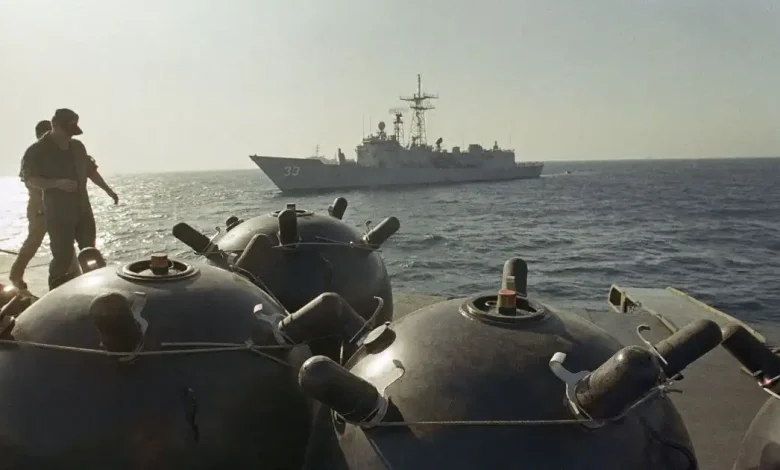
Iran’s Islamic Revolutionary Guard Corps Navy has laid additional naval mines in the Strait of Hormuz this week, according to a U.S. official and a source with knowledge of the issue first reported by Axios on 23 April. The mines are being deployed from small boats operating in the strait. Neither the exact number of newly placed mines nor the total mine count in the waterway has been publicly confirmed.
The disclosure came as the military standoff in the world’s most important oil chokepoint continued to deepen. Iran has been laying mines and attacking commercial vessels on one side while the U.S. tightens its naval blockade on the other. The new mine deployment represents the most significant escalation since the fragile ceasefire came into effect last month.
🔴 Trump’s Response
“No Hesitation” — Trump Orders Navy to Shoot and Kill Mine-Laying Boats
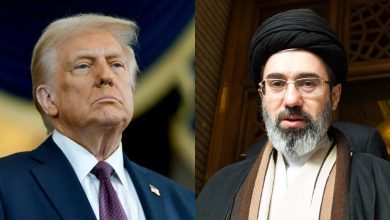
After being briefed on the new deployments, President Trump posted directly on Truth Social, ordering the U.S. Navy to shoot and kill any Iranian boat caught laying mines with no hesitation. The post noted that Iran’s full naval fleet — all 159 ships in Trump’s framing — had been sunk during earlier conflict operations, leaving only small craft to conduct the current mining campaign.
Trump simultaneously ordered mine-sweeping operations already underway to continue at three times their current intensity. The USS Chief and USS Pioneer, two mine countermeasure vessels, are understood to be operating in the strait alongside unmanned underwater vehicles conducting mine-hunting operations. Experts caution that the strait is an elevated-risk environment for mine-clearing crews given the persistent threat of Iranian drone and missile attack.
On the same day, U.S. forces boarded a sanctioned tanker, the Majestic X, in the Indian Ocean while it was bound for China — at least the fourth Iranian-linked vessel intercepted since the blockade began on April 13. U.S. Central Command has confirmed that 31 vessels have been turned back or returned to port since that date.
Trump — Truth Social / 23 April 2026
“I have ordered the United States Navy to shoot and kill any boat, small boats though they may be, that is putting mines in the waters of the Strait of Hormuz. There is to be no hesitation.”
🟡 The Wider Context
Duelling Blockades, Seized Ships — How the Strait Became a War Zone
The Strait of Hormuz had been open without interruption before the war began. Iran closed it in response to the U.S.-Israeli military campaign and has since moved to assert a legal claim over the passage, which links the Persian Gulf to the Indian Ocean through waters that partially cross Iranian territorial zones. Tehran has been charging tolls of over $1 million per ship for what it describes as safe passage guarantees — a move Trump vowed to stop through the naval blockade.
The closure has already caused the largest oil supply disruption in the history of the global market, according to the International Energy Agency — larger than the 1970s oil shocks. Roughly 20 million barrels of oil per day transited Hormuz before the war. The disruption has pushed petrol prices in the U.S. above $4 per gallon from $3 before the conflict, creating direct domestic political pressure on Trump.
Iran fired on three commercial ships in the Strait on 22 April and seized two of them: the MSC Francesca, carrying crew from Montenegro and Croatia, and the Epaminondas, a Liberia-flagged vessel with a Ukrainian and Filipino crew bound for India. Both were escorted to Iranian ports by the IRGC. The seizures came shortly after the U.S. detained two Iranian vessels as the second round of Islamabad talks was due to begin, prompting Tehran to pull out of negotiations.
🔵 Mine Clearing
A Six-Month Task — Italy Offers Minesweepers, U.S. Deploys Underwater Drones
Clearing the strait of mines is not a quick operation. Experts have assessed that a full mine-clearance sweep could take up to six months even under favorable conditions. Italy’s Navy chief of staff told state broadcaster RAI that Rome is ready to deploy up to four vessels to support the effort: two minesweepers, an escort vessel, and a logistics ship. He described Italy as part of a broader international coalition with additional nations also contributing minesweepers.
U.S. forces are operating unmanned underwater vehicles for mine-hunting alongside the surface MCM fleet. Experts caution that mine-clearing crews in the strait face a significantly elevated risk environment compared to peacetime operations, given the persistent threat of Iranian drone and missile attack on vessels conducting slow, systematic sweeps.
Earlier this month, the New York Times reported that Iran itself is finding it increasingly difficult to reopen the strait, because it cannot locate all the mines its own forces planted during active conflict operations. Iran’s mine problem is now a problem for both sides of the standoff.
🟡 The Diplomatic Collapse
Talks Stalled — Iran Says Washington’s Contradictory Messages Are to Blame
The second round of U.S.-Iran negotiations in Islamabad has not taken place. Vice President Vance was expected to lead the U.S. delegation this week but remained grounded because Tehran has not confirmed whether it will return to the table. Pakistan, the mediator, has urged both sides to attend.
Iranian Foreign Ministry spokesperson Esmail Baghaei told state television that the delay is not due to indecision on Iran’s part but to what he described as contradictory messages, contradictory behaviors, and unacceptable actions from the American side. Iran’s parliament speaker and chief negotiator Mohammad Bagher Ghalibaf argued that reopening Hormuz is impossible while the U.S. naval blockade of Iranian ports remains in place, calling it a flagrant breach of the ceasefire. Trump, meanwhile, extended the truce while maintaining the blockade, with the White House describing Trump as satisfied with the siege.
Ghalibaf — Iran Parliament Speaker / 23 April 2026
“Reopening the Strait of Hormuz is impossible with such flagrant breach of the ceasefire.”
🔴 Israel on the Edge
Israel “Prepared to Renew War” — Waiting Only for U.S. Green Light
Against the backdrop of the Hormuz standoff, Israel’s Defence Minister Katz stated in a video address that Israel is prepared to resume war against Iran and is waiting only for a green light from Washington. Katz said Israeli forces are ready for both defence and attack with targets already marked, and described the goal as completing the elimination of the Khamenei dynasty and destroying Iran’s energy and electricity infrastructure.
Trump said separately that Israel will have to defend itself if targeted by Hezbollah, describing Iran’s mine-laying as ultimately more damaging to Iran than to the United States. Escalating Hezbollah-Israel exchanges in Lebanon remain a secondary risk factor — if strikes in Lebanon intensify, Iran may feel compelled to re-enter the conflict directly, which would collapse the ceasefire entirely.
🔴 Strategy Battles Assessment
The decision by Iran to continue laying mines after a ceasefire was declared is not irrational — it is a calculated squeeze. Iran knows it cannot win a symmetrical military confrontation. But it does not need to. Mines are cheap, they are persistent, and they impose disproportionate costs on the other side. The IEA has already called this the largest oil supply disruption in history — bigger than the 1970s shocks — and every week the strait remains closed adds hundreds of billions of dollars in global economic damage.
Trump’s order to shoot and kill mine-laying boats is genuinely escalatory. It creates a standing authorization for U.S. naval vessels to fire on Iranian small craft without further confirmation from the command chain. In a narrow, congested waterway, the risk of an incident — misidentification, a fast-moving skiff that turns out to be civilian, an Iranian response that triggers a broader exchange — is real. The shoot-on-sight order removes a layer of decision-making that, in past flashpoints, helped prevent accidental escalation from becoming all-out conflict.
The deeper problem is structural: both sides are trapped. Iran cannot reopen the strait without surrendering the only leverage it retains. The U.S. cannot lift its blockade without appearing to reward the mine-laying. The ceasefire is holding in name only. The second round of Islamabad talks has not happened. Iran is adding mines. The U.S. is intercepting tankers bound for China and authorizing lethal force against small boats. This is not de-escalation. This is two powers managing an ongoing conflict under a ceasefire label, and the gap between that label and the reality on the water is growing by the day.
Strategy Battles — Related Coverage
Sources
- Axios — “Iran deploys more mines in the Strait of Hormuz, sources say,” 23 April 2026
- Militarnyi.com — “US Detects Iran Deploying Additional Naval Mines in Strait of Hormuz,” 24 April 2026
- Al Jazeera — “US to ‘shoot and kill’ Iranian boats laying mines in Hormuz, Trump says,” 23 April 2026
- NBC News Live Blog — “Trump orders U.S. military to ‘shoot and kill’ Iranian boats mining Strait of Hormuz,” 24 April 2026
- TIME — “Trump Orders U.S. Navy to ‘Shoot and Kill’ Any Boat Laying Mines in Strait of Hormuz,” 23 April 2026
- Euronews — “Diplomacy stalls as Iran fires on three ships in the Strait of Hormuz,” 23 April 2026
- Wikipedia — “2026 Strait of Hormuz Crisis” (live archive), accessed 24 April 2026
Editorial Verification
The following facts are confirmed across multiple independent outlets: Iran’s IRGCN has deployed additional naval mines in the Strait of Hormuz this week; Trump issued a Truth Social order to shoot and kill mine-laying boats with no hesitation; mine-sweeping operations are underway using the USS Chief, USS Pioneer, and unmanned underwater vehicles; the Majestic X was boarded in the Indian Ocean; Iran seized the MSC Francesca and Epaminondas on 22 April. The exact number of newly deployed mines and total mine count in the strait is not publicly confirmed — this information traces to a single U.S. intelligence briefing reported by Axios and is flagged as a single-source item. Iran’s legal claims over Hormuz are stated Iranian government positions, not verified under international law. The IEA’s description of this as the largest oil supply disruption in history is sourced to the IEA’s own public assessment.
Approved for Publication
Marcus V. Thorne
Lead Editor, Strategy Battles
©StrategyBattles.net 2026
This article is for news and analysis purposes only. It is based on publicly available news sources and military updates. All rights reserved. Not for commercial reuse without permission.