Hegseth Pledges Kurdistan Support as Iran Blockade Goes Global
34
Ships Intercepted & Turned Back
3
Vessels Seized (M/V Touska + 2 Dark Fleet)
2nd
Aircraft Carrier Deploying to Blockade
🟡 The Pentagon Briefing
Hegseth Tells Erbil: Washington Is “Closely Monitoring” Attacks on the Kurdistan Region
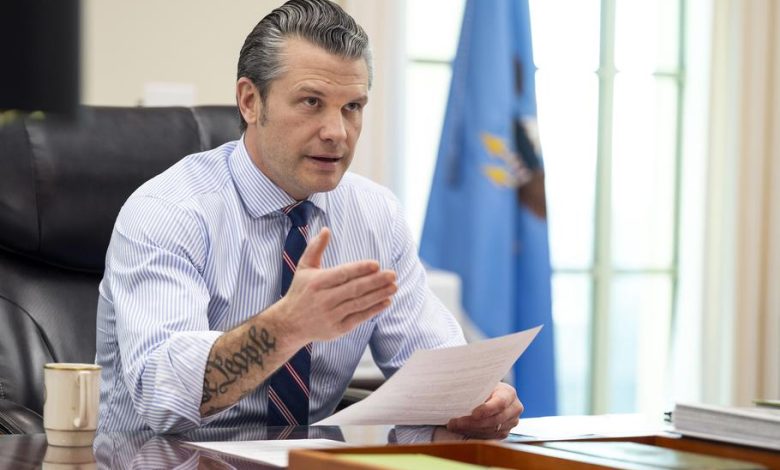
U.S. Secretary of War Pete Hegseth used a direct interview with Kurdistan24’s Washington bureau chief Rahim Rashidi on Friday to reaffirm America’s security commitment to the Kurdistan Region, stating that the United States is “closely monitoring” ongoing drone and missile strikes targeting Erbil and surrounding areas. The remarks were the first time Hegseth had addressed the Kurdistan Region’s security situation directly and on the record since the conflict with Iran began in late February.
The Kurdistan Regional Government has been living under a sustained threat posture throughout the conflict. The Washington Institute for Near East Policy documented more than 500 drone and missile attacks against Kurdish territory launched by Iran and Iranian-aligned Iraqi militias since the war’s outbreak, killing approximately 10 civilians and wounding nearly 60 others. The Lanaz oil refinery near Erbil and the Khor Mor natural gas field were struck repeatedly, triggering power blackouts across the region.
Hegseth’s pledge, while not accompanied by specific new military commitments, reinforces the Kurdish leadership’s calculation that Washington views the Kurdistan Region as a central pillar of U.S. security architecture in the Middle East. That architecture is now operating on an indefinite ceasefire footing, with combat operations against Iran formally concluded.
🔵 The Blockade Announcement
Operation Epic Fury Declared Complete — Blockade Transitions to “Global” Maritime Interdiction Phase
The broader context of Friday’s statements from Washington went far beyond Kurdistan. In a joint Pentagon press briefing, Hegseth and Chairman of the Joint Chiefs of Staff Gen. Dan Caine formally announced that Operation Epic Fury has achieved a “decisive military result,” and that the campaign has now transitioned into what Hegseth described as a “growing and going global” maritime blockade of Iran. The shift marks the end of the active combat phase and the beginning of an indefinite economic containment operation.
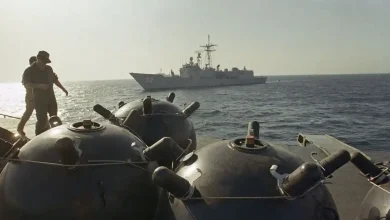
Gen. Caine detailed the mechanics of the blockade for reporters. The U.S. military is currently enforcing restrictions on all vessels attempting to move to or from Iranian ports, regardless of flag state. As of Friday morning, 34 ships had been intercepted and forced to turn back. Three additional vessels were seized outright: the M/V Touska, and two “dark fleet” tankers identified as the M/T Tifani and the M/T Majestic X. All three interdictions occurred within U.S. Indo-Pacific Command’s area of responsibility in the Indian Ocean. The crews of those vessels remain in American custody.
A second U.S. aircraft carrier is expected to join the blockade shortly. The Pentagon confirmed that 34 non-Iranian vessels have been permitted to transit the Strait of Hormuz since the operation began, including during overnight hours, though overall shipping volumes through the strait remain substantially below historical norms.
Secretary of War Pete Hegseth — Pentagon Briefing, April 24, 2026
“We are very clear about our authority and the necessity of these actions to achieve the administration’s strategic objectives.”
🔴 Rules of Engagement
Trump Orders “Shoot to Destroy” — Iran Boards Cargo Vessels in Strait as Tit-for-Tat Escalates
The rules of engagement governing the blockade have now been formally hardened. Following a direct order from President Donald Trump issued Thursday, U.S. Navy commanders have been given explicit authority to “shoot to destroy” any Iranian asset found to be laying mines in the Strait of Hormuz or threatening commercial shipping. Hegseth confirmed Friday that those orders are now in the hands of operational commanders and are considered active.
Iran has not been passive. Iranian Revolutionary Guard Corps commandos were captured on edited video released Thursday showing masked personnel using speedboats to board commercial vessels transiting the strait. Hegseth characterized the targeted ships as “random” civilian cargo vessels subjected to gunfire. The Philippine government separately confirmed that 15 Filipino seafarers aboard vessels seized by Iran are safe and unharmed, based on the latest information available to the Pentagon.
Iran has also claimed it began collecting toll revenue from vessels transiting the strait on Thursday. U.S. Central Command rejected that assertion, stating it maintains “total control” of the waterway. The competing claims illustrate the contested nature of the strait’s status under the current operational posture, where both powers are enforcing overlapping and incompatible maritime authority simultaneously.
Gen. Dan Caine — Chairman, Joint Chiefs of Staff — April 24, 2026
“The U.S. military is currently enforcing restrictions on all vessels moving to or from Iranian ports.”
🟡 The Diplomatic Track
Trump “In No Hurry” — Blockade Replaces Bombs as Maximum Pressure Tool
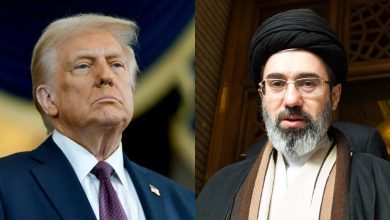
Hegseth’s comments to Kurdistan24 on Iran’s nuclear ambitions sat within a broader diplomatic posture outlined at the Pentagon. The Secretary stated that a “wise deal” with Iran remains Washington’s preferred outcome, and that the nuclear question is the central objective. President Trump, speaking separately at the White House, reinforced that position while declining to set any timeline for a settlement. Trump described the current pause in bombing as giving him “more leverage” over a “severely fractured” Iranian leadership, and warned that strikes would resume if Tehran failed to engage meaningfully.
The indefinite ceasefire with Iran runs alongside a separate three-week extension of the ceasefire between Israel and Lebanon. Pentagon officials believe that extension could influence Tehran’s calculations, given Iran’s deep investment in Hezbollah as a strategic deterrent. With both fronts now under temporary operational pause, the blockade has become the primary pressure instrument.
One unusual wrinkle in the week’s developments was the departure of Navy Secretary John Phelan. President Trump confirmed Phelan had left his post at the direction of both himself and Hegseth, describing the outgoing secretary as a “wonderful guy” who struggled to maintain professional relationships with senior officials. The dismissal, during an active global blockade operation, underscores the degree of internal turbulence within the Department of War even as it projects outward confidence.
🟢 What This Means for Kurdistan
For Erbil, Hegseth’s Words Are Significant — But the KRG Needs More Than Monitoring
The Kurdistan Regional Government has been among the most exposed parties throughout the conflict. While not a formal combatant, the region served as a target for Iranian proxy aggression stretching back to before Operation Epic Fury commenced. The KRG has repeatedly called for enhanced air defense capabilities and concrete U.S. security guarantees. Hegseth’s language on Friday about “closely monitoring” the situation represents Washington’s baseline acknowledgment of that exposure, but falls short of the binding military commitments Erbil has been seeking.
The strategic value of Kurdistan to U.S. regional policy is not in question. Erbil functions as a hub for counter-terrorism operations, houses significant U.S. military infrastructure, and provides a stable governance model in an otherwise fractured landscape. The KRG’s willingness to absorb hundreds of strikes without triggering direct escalation has also made it a passive but important stabilizer in the conflict’s broader dynamics.
The transition to a blockade phase — rather than active air campaign — should theoretically reduce the threat of further missile and drone strikes on Erbil originating from Iranian territory. However, Iranian-aligned Iraqi militias operating from Popular Mobilization Force positions inside Iraq remain a live threat vector that no maritime blockade can neutralize.
Strategy Battles — Related Coverage
Islamabad Collapses: Vance Says Iran Refused America’s Terms After 21 Hours
Iran Rejected U.S. Demands — Trump Orders Naval Blockade of Strait of Hormuz
Iran’s Spy Purge: 50 Arrested Across 16 Provinces for Mapping Missile Targets
Sources
- Kurdistan24 — “U.S. War Secretary Hegseth Pledges Support for Kurdistan Region,” April 24, 2026
- Kurdistan24 — “U.S. Department of War Expands Blockade of Iran Globally,” April 24, 2026
- CBS News — Melissa Quinn and Joe Walsh, Pentagon blockade briefing dispatch, April 24, 2026 (cited via Kurdistan24)
- The Washington Institute for Near East Policy — KRG strike exposure assessment, 2026
Editorial Verification
Verified: Hegseth’s direct commitment to monitoring Kurdistan Region security, confirmed via Kurdistan24 interview. Pentagon global blockade announcement verified via Kurdistan24 and CBS News. Ship intercept and seizure figures (34 turned back, 3 seized: M/V Touska, M/T Tifani, M/T Majestic X) confirmed by U.S. Department of War. Gen. Caine Indian Ocean interdiction details confirmed. “Shoot to destroy” mine-laying order confirmed by Hegseth at briefing. 15 Filipino seafarers safe, confirmed by Philippine government via Pentagon. Navy Secretary Phelan departure confirmed by White House background exchange.
Single-source items: Iran’s claim to be collecting tolls at Hormuz — attributed to Iranian statements only, unconfirmed by neutral parties. Iran-Pakistan consultation details limited to regional wire reporting. Pope Leo criticism of the campaign — referenced in Hegseth’s comments, full Vatican statement not independently reviewed.
Approved for Publication / Marcus V. Thorne — Lead Editor, StrategyBattles.net — April 24, 2026
©StrategyBattles.net 2026. All rights reserved. This article is produced for informational and editorial purposes. All military claims attributed to official statements are reported as stated and do not constitute independent verification of operational outcomes. Strategy Battles is an independent defence and security analysis publication.