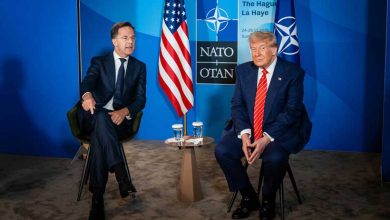
Pentagon Weighs Punishing NATO Allies Over Iran War Spain Suspension, Falklands Threat
2
U.S. Bases in Spain at Risk
76 Yrs
NATO Alliance Age Now In Question
55 Days
Since Iran War Began Feb 28
🔴 The Internal Email
Pentagon Circulates Options to Punish Reluctant NATO Allies
An internal Pentagon email is circulating at high levels outlining punishment options for NATO allies deemed to have failed Washington during the Iran war, a U.S. official told Reuters on April 24. The official described the contents on condition of anonymity. The options were described as being intended to send a strong signal rather than immediately alter military posture.
The email centres on allied failures to grant what the Pentagon terms ABO rights — access, basing and overflight — which the document reportedly frames as the absolute baseline of NATO membership. Countries identified as “difficult” in the note face a range of proposed consequences, from symbolic demotions within alliance structures to direct challenges to their territorial claims.
The note does not recommend withdrawing from NATO, and the official clarified that base closures in Europe are also not among the options listed. A widely anticipated US force drawdown from certain European countries was not confirmed as part of the email’s content, though the official declined to specifically rule it out.
Kingsley Wilson — Pentagon Press Secretary, April 24, 2026
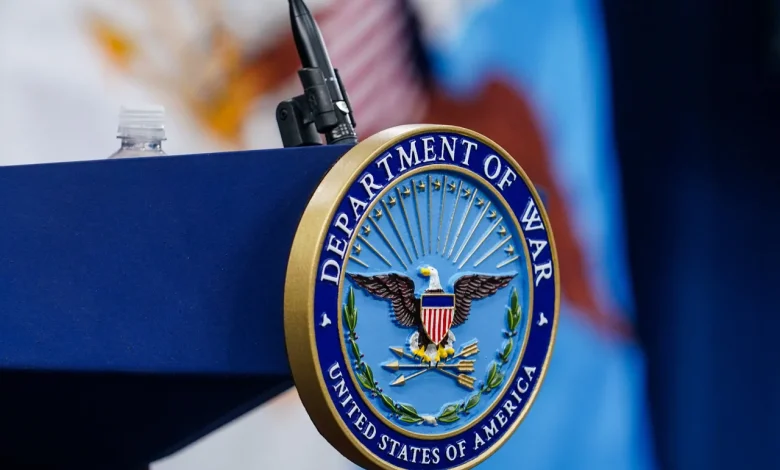
“As President Trump has said, despite everything that the United States has done for our NATO allies, they were not there for us. The War Department will ensure that the President has credible options to ensure that our allies are no longer a paper tiger and instead do their part.”
🟡 Spain in the Crosshairs
Suspension from NATO on the Table as Madrid Refuses to Yield Its Bases
Spain sits at the centre of Washington’s frustration. The socialist government in Madrid publicly declared it would not allow its territory or airspace to be used for offensive operations against Iran. That refusal put two strategically critical facilities directly in the spotlight: Naval Station Rota and Moron Air Base, both of which carry significant US operational weight in the Mediterranean and Atlantic approach.
The email proposes suspending Spain from prominent or prestigious NATO positions. The official who disclosed the contents acknowledged the practical military impact would be limited, but stressed the symbolic weight of such a move would be substantial. Washington appears to be calculating that prestige and standing matter to European governments in ways that direct military threats do not.
No mechanism for formally suspending a NATO member currently exists in the alliance’s founding treaty, and the official could not describe how such a step would be legally pursued. The option appears intended as political pressure rather than an immediately executable action.
Pedro Sanchez — Prime Minister of Spain, April 24, 2026
“We do not work off emails. We work off official documents and government positions, in this case of the United States.”
🔵 The Falklands Card
Washington Threatens to Withdraw Diplomatic Support for British Territorial Claims
The most striking option in the email targets Britain directly. The document reportedly includes a proposal to reassess longstanding US diplomatic support for European “imperial possessions” — with the Falkland Islands cited specifically. The islands are administered by the United Kingdom but formally claimed by Argentina, whose president Javier Milei has cultivated close ties with Trump.
Britain has drawn repeated public criticism from Trump during the Iran conflict. The president called Prime Minister Keir Starmer cowardly and dismissed British aircraft carriers as toys, after London initially declined US requests to use its bases for offensive Iran strikes. Britain later partially relented, permitting defensive missions to protect residents in the region.
The State Department’s official position currently acknowledges UK administration of the islands while noting Argentina’s unresolved claim. Shifting that language — or withdrawing it entirely — would be a significant diplomatic rupture with an ally Washington still technically classes as a close partner.
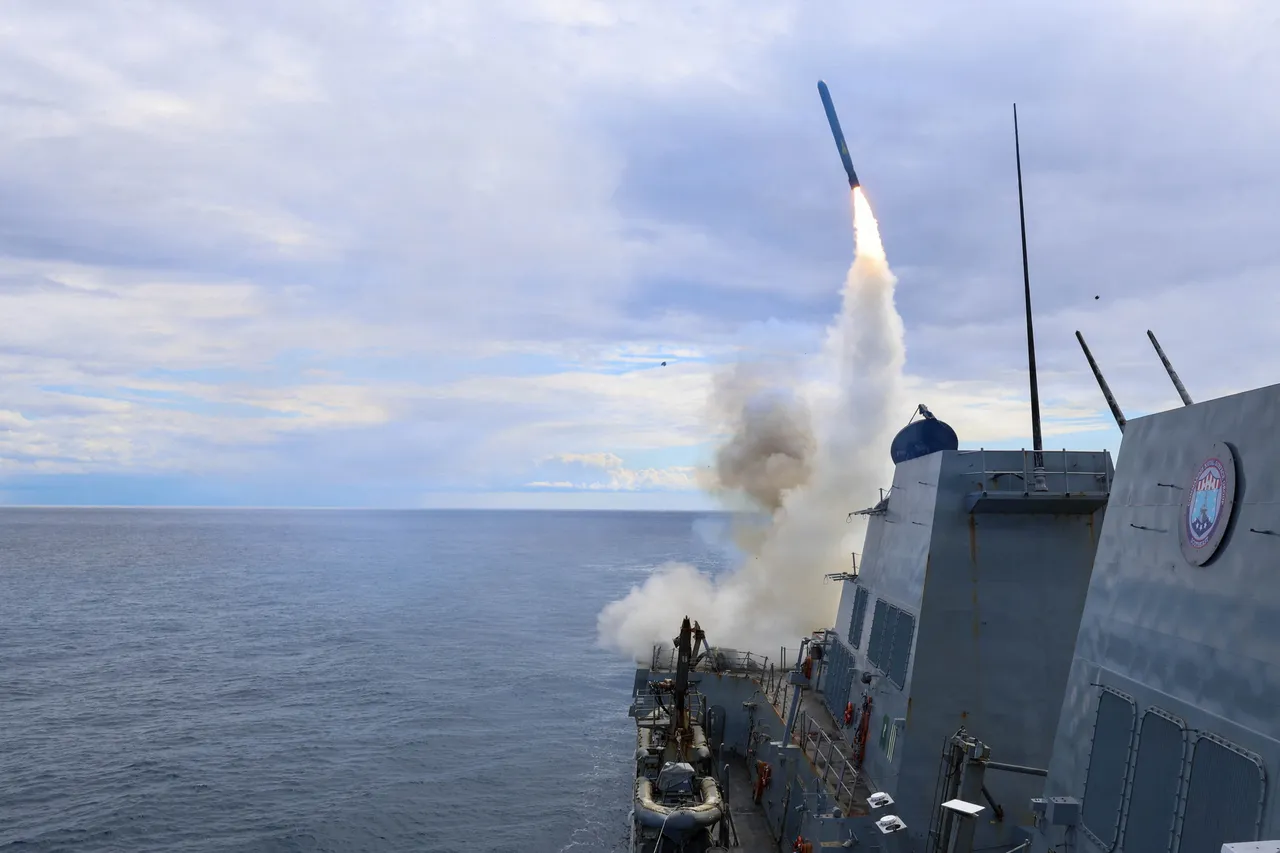
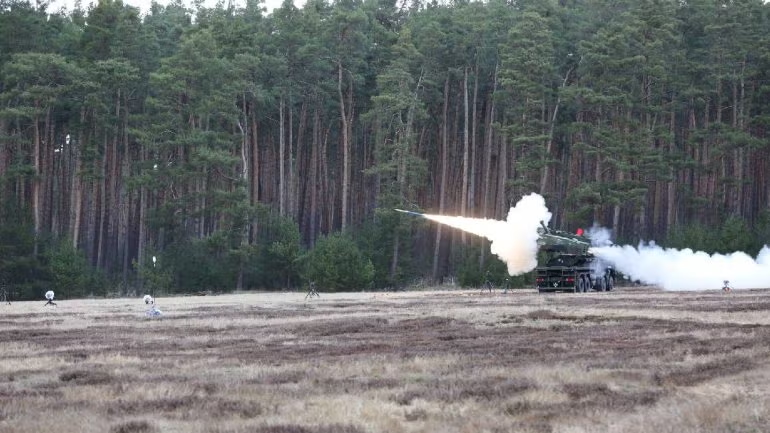
US military commanders have expressed concern over weapons inventories and allied support levels during the Iran war. Photo: Reuters / TRT World.
🔴 Alliance Under Strain
Hegseth Warns NATO Has Been “Laid Bare” While Trump Eyes Withdrawal
Defense Secretary Pete Hegseth set the tone for the email’s contents in remarks at the Pentagon earlier this month. He stated publicly that the Iran war had exposed deep fault lines within the alliance, noting that Iran’s longer-range missiles cannot reach the United States but can reach Europe. The implication was direct: European allies have more reason than America to support the campaign, yet many have refused.
Trump himself has repeatedly floated the prospect of a US withdrawal from NATO since the Iran war began. Asked by Reuters on April 1 whether leaving the alliance was a genuine possibility, he did not rule it out, replying only with a rhetorical question implying the answer was yes. The Pentagon email does not include withdrawal as an option, but the public statement from the president gives the implied threat significant weight.
Pete Hegseth — U.S. Defense Secretary, April 2026
“We get questions, or roadblocks, or hesitations. You don’t have much of an alliance if you have countries that are not willing to stand with you when you need them.”
🟡 Europe’s Counter-Argument
London and Paris Say Joining the Blockade Means Entering the War
Britain and France have both argued that joining the US naval blockade of the Strait of Hormuz would constitute active participation in the war, a step their governments have declined to take. Both have stated willingness to help reopen the strait once a lasting ceasefire is in place or the conflict concludes. Washington regards that condition as an unacceptable restraint on allied solidarity.
The European position reflects genuine domestic political constraints as well as legal concerns about collective defence obligations under Article 5. Joining a US offensive war is categorically different from responding to an attack on alliance territory. Most European capitals are navigating a situation where American expectations outpace the political consensus at home.
The standoff has created an unprecedented moment of open alliance fracture. American officials are discussing punishments publicly; European leaders are responding by pointing to legal frameworks rather than solidarity. Neither side appears to be moving toward the other.
Strategy Battles Assessment
The Pentagon email’s contents reveal something more significant than tactical frustration: Washington is now treating allied non-compliance in a regional war as a structural problem requiring structural solutions, not diplomatic ones. The threat to suspend Spain from alliance positions is legally problematic and practically limited — but that is almost certainly the point. It is calibrated to inflict maximum political pain with minimum legal exposure. The Falklands option is sharper. The islands represent a settled, cross-party British national conviction dating to the 1982 war. Raising that card signals that Washington is prepared to weaponise historical grievance in a way no US administration has previously attempted against a NATO partner. For European governments watching this develop, the signal is not about Spain or the Falklands specifically — it is about whether the Article 5 mutual defence guarantee still functions as a symmetrical commitment, or whether it has become conditional on following American military judgement regardless of the legal or political circumstances. That is the question the Iran war has placed directly on the alliance’s table, and there is no easy answer available to either side.
Strategy Battles — Related Coverage
- TRT World — “Pentagon email weighs measures against NATO allies over Iran war, including suspending Spain” — April 24, 2026
- Reuters — Original source reporting via U.S. official (anonymous) and Pentagon press secretary Kingsley Wilson — April 24, 2026
- TRT World — “US considers shifting troops from some NATO countries amid Iran war support rift” — April 2026
Editorial Verification
The existence of the Pentagon email and its general contents are reported by Reuters via a single anonymous US official — SINGLE SOURCE, not independently confirmed by Strategy Battles. The on-record response from Pentagon press secretary Kingsley Wilson corroborates that Washington is preparing retaliatory options against allies, without confirming specific email contents. Spanish Prime Minister Sanchez’s response is confirmed on-record. Trump’s April 1 Reuters interview quote is previously published and confirmed. Hegseth’s Pentagon remarks are from on-record briefings. The Falklands reassessment option is reported by Reuters via the same anonymous official — SINGLE SOURCE. No classified documents were reviewed by Strategy Battles. All analysis in the assessment box is original editorial content.
Approved for Publication
Marcus V. Thorne
Lead Editor, Strategy Battles
©StrategyBattles.net 2026
This article is for news and analysis purposes only. Based on publicly available news sources and military updates. All rights reserved. Not for commercial reuse without permission.