UAE Air Defenses Engage Iranian Attack as Ceasefire Fractures: US Destroyers Also Hit in Hormuz

3 DDGs
US Navy Destroyers Attacked
2,000+
Drones Fired at UAE Since 28 Feb
30 Days
Ceasefire Age at Time of Attack
📍 UAE / Strait of Hormuz / Qeshm Island: Combat Zone 7-8 May 2026

Iranian strikes on UAE territory and CENTCOM self-defense engagement in the Strait of Hormuz, 7-8 May 2026. Datum WGS84, UTM Zone 40R. Map: Strategy Battles / OSINT.
📍 DUBAI, UAE: AIR DEFENSE ENGAGEMENT
MGRS: 40RCN 25780 88745
25.2048°N 55.2708°E
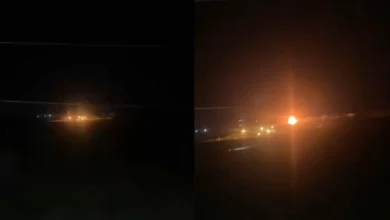
UAE air defenses actively engaged incoming Iranian missiles and drones early 8 May 2026. Residents warned not to approach or touch debris from interceptions.
📍 STRAIT OF HORMUZ: US NAVY TRANSIT POINT
MGRS: 40RDQ 26299 38469
26.5650°N 56.2600°E
USS Truxtun, USS Rafael Peralta and USS Mason transited here under Iranian attack 7 May 2026. CENTCOM confirmed self-defense strikes against Iranian launch sites.
📍 FUJAIRAH OIL ZONE, UAE
MGRS: 40RDN 32097 79379
25.1288°N 56.3264°E
An Iranian drone ignited a large fire at the Fujairah Petroleum Industries Zone on 4 May 2026. Three Indian nationals were moderately injured. First strike since the April 8 ceasefire.
📍 QESHM ISLAND, IRAN: IRGC EXCHANGE
MGRS: 40RDQ 27539 81106
26.9500°N 56.2700°E
Iranian state media reported armed forces exchanged fire with “the enemy” at Qeshm Island 7 May 2026. Cross-check reference: Bandar Abbas 40RDQ 18200 90000.
🔴 The Attack on the UAE
Air Defenses Active Over Dubai as Iranian Salvoes Resume
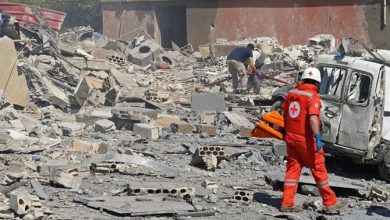
In the early hours of Friday 8 May 2026, the UAE Ministry of Defense announced that air defenses at grid reference 40RCN 25780 88745 (25.2048°N, 55.2708°E), covering the Dubai metropolitan area, were actively engaging an incoming barrage of Iranian missiles and drones. The ministry issued a public safety advisory warning residents not to approach, photograph, or touch any debris or fragments resulting from successful interceptions. There were no immediate reports of casualties, though the advisory itself signaled that projectile fragments had already reached the ground.
The overnight assault followed a pattern that had become familiar since the US-Israeli war on Iran began on 28 February 2026. Tehran has launched more than 2,000 drones, hundreds of ballistic missiles, and dozens of cruise missiles at UAE territory since that date. The vast majority were intercepted by THAAD and Patriot missile defense systems, but successful interceptions still produced debris that struck populated areas, killing at least 13 people and wounding over 200 since the start of the conflict, according to UAE Ministry of Defense figures.
Friday’s attack was the third salvo in less than a week. On 4 May, an Iranian drone struck the Fujairah Petroleum Industries Zone at 40RDN 32097 79379 (25.1288°N, 56.3264°E), igniting a large fire and injuring three Indian nationals, according to Al Jazeera. Strikes on Monday and Tuesday that week had already marked the first resumption of attacks since the April 8 ceasefire, breaking what Emirati authorities had hoped would hold as a negotiated pause extended toward a permanent settlement.
UAE Ministry of Defense : Statement, 8 May 2026
“Any debris or fragments that have fallen as a result of successful air interceptions” should not be approached, photographed or touched by residents.
🔵 The Hormuz Exchange
Three US Destroyers Attacked in the Strait: CENTCOM Strikes Iranian Facilities
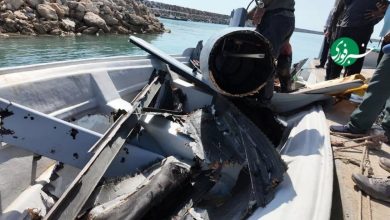
Hours before the UAE attack, the most significant naval combat exchange since the ceasefire erupted at grid reference 40RDQ 26299 38469 (26.5650°N, 56.2600°E) in the Strait of Hormuz. Three US Navy guided-missile destroyers, USS Truxtun, USS Rafael Peralta, and USS Mason, were transiting the strait toward the Gulf of Oman when Iranian forces launched a combined attack of multiple missiles, drones, and small boats against the formation. US Central Command confirmed the engagement in an official press release stating that US forces intercepted the attacks and responded with self-defense strikes targeting Iranian military facilities, including missile and drone launch sites, command and control locations, and intelligence, surveillance and reconnaissance nodes. No US assets were struck.
Iranian state media separately reported that its armed forces exchanged fire with “the enemy” at Qeshm Island (40RDQ 27539 81106, 26.9500°N, 56.2700°E), a large island of approximately 150,000 inhabitants in the strait. Explosions were also reported near Bandar Abbas city on the Iranian mainland, consistent with CENTCOM’s statement that US strikes reached facilities on or near Iranian territory. Iran had not issued a formal public denial of the CENTCOM account at time of publication. ⚠ SINGLE SOURCE
President Trump addressed the exchange at an impromptu appearance at the Lincoln Memorial Reflecting Pool. He described the retaliatory strikes as a “love tap” and insisted the ceasefire remained in place, before adding a direct threat: “They have to understand: If it doesn’t get signed, they’re going to have a lot of pain.” He told reporters that Iranian personnel responsible for the attacks were “no longer with us,” a statement consistent with CENTCOM’s targeting of the launch crews and command nodes involved in the exchange. His remarks were verified by ABC News and the local10 AP wire, corroborated by Eurasia Review.
President Donald Trump : Lincoln Memorial, 7 May 2026
“They trifled with us today. We blew them away. They shot missiles. Every missile was knocked down, every drone was knocked down, and the people that shot it are no longer with us.”
🟡 The Diplomatic Backdrop
Iran Reviews US Proposals as Pakistan Mediates Around the Clock
The firefights in the strait and over UAE cities occurred against a backdrop of active, if stalled, diplomacy. Iranian Foreign Ministry spokesperson Esmail Baghaei confirmed, via Iranian state television reported by NPR and ABC News, that Tehran was reviewing the latest US proposals delivered through Pakistan. Baghaei stated Iran had not yet reached a conclusion and that no response had been transmitted to the American side. Pakistani Prime Minister Shehbaz Sharif said in televised remarks that his government remained in continuous contact with both Iran and the United States to stop the war and extend the ceasefire. Pakistani Foreign Ministry spokesperson Tahir Andrabi added that Islamabad expected an agreement sooner rather than later, declining to provide a timeline.
The core disputes blocking a final settlement remain unchanged: Iran’s nuclear program, which the US and Israel vowed to halt when they launched the war on 28 February, and Iran’s stranglehold over the Strait of Hormuz. Earlier Thursday, a shipping data firm reported the creation of a new Iranian government agency tasked with vetting and taxing vessels seeking passage through the strait. That move, combined with an estimated 1,500 commercial vessels trapped in the Persian Gulf according to the UN International Maritime Organization, underscored the scale of economic coercion Iran is deploying as leverage in negotiations.
The US-led Project Freedom mission to escort commercial ships through the strait remained paused. Trump had suspended the operation on 6 May following diplomatic pressure from Saudi Arabia, which had restricted US use of its bases and airspace for the mission and communicated its concerns directly in a phone call between Crown Prince Mohammed bin Salman and the President. A Saudi official, cited by NPR speaking on condition of anonymity, confirmed the kingdom also sent a separate message to Iran that it would not participate in US attacks related to reopening the strait. Direct Israel-Lebanon talks were separately reported by a US official cited by the Associated Press, speaking on condition of anonymity to discuss plans for closed-door meetings, to be scheduled for 14 and 15 May in Washington.
🟢 UAE Legal Response
Abu Dhabi Forms War Crimes Documentation Committee as Attacks Accumulate
On Thursday 7 May, the UAE government announced the formation of a national committee tasked with documenting Iranian attacks and the resulting human, economic, and material damage, according to Arab News citing state news agency WAM. The committee, chaired by the UAE attorney general, will compile evidence of what officials described as Iranian acts of aggression and alleged international crimes committed against the country, its citizens, residents, and visitors. WAM said the body would document violations according to internationally recognized legal and technical standards, with the explicit goal of supporting the UAE’s pursuit of accountability, justice, and reparations through international legal mechanisms.
The legal committee was announced one day after the UAE Foreign Ministry condemned statements by Tehran accusing Abu Dhabi of cooperation with the United States in ways that threatened Iran’s security and national interests. The Foreign Ministry responded that the UAE’s defense partnerships and international relations were a purely sovereign matter. The exchange illustrated the depth of hostility between Abu Dhabi and Tehran that has developed across 70 days of conflict. Other Gulf Arab states have also faced repeated Iranian strikes during the conflict despite insisting they were not party to the US-Israeli military campaign, though the UAE has absorbed the heaviest volume of attacks among Gulf nations.
Strategy Battles Assessment
The pattern that emerges from this week’s events is not chaos. It is calibration. Iran is sustaining strikes against the UAE and probing engagements against US Navy ships in the Strait of Hormuz while simultaneously reviewing American proposals through Pakistani intermediaries. The dual-track is deliberate. By maintaining kinetic pressure, Tehran prevents Washington from treating the negotiated pause as settled and keeps its coercive leverage intact. By leaving the channel to Pakistan open and signaling it has not rejected US proposals, it avoids giving Trump the clean political rationale for resuming the full-scale bombardment that began on 28 February.
The engagement of three US destroyers by a multi-domain Iranian attack combining missiles, drones, and fast boats simultaneously deserves close attention as a tactical data point. Iranian forces are testing the limits of US shipborne defensive systems with layered, mixed-vector salvoes. Each engagement is also an intelligence collection exercise: Iran is mapping how US ships prioritize and sequence intercepts, how quickly they transition from defense to offense, and how much simultaneous threat load a three-ship formation can absorb. Trump’s “love tap” framing is designed to prevent escalation, but it also risks communicating a higher Iranian pain tolerance to the IRGC than the situation warrants.
The UAE’s decision to establish a formal legal documentation committee is a strategic pivot that deserves equal attention. Abu Dhabi is building a dossier for international legal proceedings, which implies it no longer expects the conflict to end in a way that simply makes the attacks stop. It is planning for a post-war accountability process. The committee is, in effect, an institutional acknowledgment that this war and its consequences will outlast the ceasefire, whatever form a final agreement eventually takes.
Strategy Battles, Related Coverage
Sources
- Arab News (AP wire), UAE Reports Drone and Missile Attack as Iran War Ceasefire Is Challenged (8 May 2026)
- US Central Command (CENTCOM), CENTCOM Protects US Warships Transiting Strait of Hormuz, Official Press Release (7 May 2026)
- Stars and Stripes, US Forces Intercept Iranian Attacks on 3 Navy Ships, CENTCOM Says (7 May 2026)
- NPR, US Military Says It Intercepted Iranian Attacks on Three Navy Ships in Strait of Hormuz (7 May 2026)
- ABC News, Iran Live Updates: US Strikes Iran After Unprovoked Attacks on Warships (7-8 May 2026)
- CBC News (AP), US Says It Intercepted Iranian Attacks on Three Navy Ships in Strait of Hormuz (7 May 2026)
- Al Jazeera, UAE Accuses Iran of Attacks as Large Fire Breaks Out at Oil Refinery (4 May 2026)
- Wikipedia (open-source aggregation), 2026 Iranian Strikes on the United Arab Emirates (continuously updated)
Editorial Verification
UAE Ministry of Defense statement (8 May 2026): verified via Arab News (AP wire) and corroborated by Business Standard, WCCO/Audacy, and local10 AP syndication (3+ independent outlets). CENTCOM press release on USS Truxtun / Peralta / Mason engagement: verified via official CENTCOM.mil release, corroborated by Stars and Stripes, NPR, ABC News, and CBC News (5 independent outlets). Trump remarks (“love tap,” “they trifled with us”): verified via ABC News live updates, corroborated by local10 AP wire and Eurasia Review (3 outlets). Pakistani PM Sharif and FM Dar mediation statements: verified via multiple AP syndications and CBC News (2+ outlets). Iranian FM spokesperson Baghaei statement: verified via NPR citing Iranian state TV and ABC News (2 outlets). Fujairah oil zone fire (4 May): verified via Al Jazeera and Wikipedia open-source aggregation citing UAE MoD (2 outlets). UAE legal committee formation: verified via Arab News citing state agency WAM (primary source). Qeshm Island IRGC exchange: single-source from Iranian state media via NPR and Wikipedia aggregation; flagged with purple single-source tag in article body; not independently corroborated by Western OSINT at time of publication. Iran had not issued a formal public denial of the CENTCOM account at time of publication.
MGRS datum: WGS84 / UTM Zone: 40R / Cross-check reference: Bandar Abbas, Iran, 40RDQ 18200 90000.
No satellite imagery used. All sources open-source, dated 7-8 May 2026.
All claims independently attributed and verified to open sources where possible.
Approved for Publication
Marcus V. Thorne
Lead Editor, Strategy Battles
©StrategyBattles.net 2026
This article is for news and analysis purposes only. Based on publicly available news sources and military updates. All rights reserved. Not for commercial reuse without permission.