Nigeria Repels ISWAP Pre-Dawn Assault on 27th Brigade Headquarters in Yobe State, 50 Militants Reported Killed
50+
Militants Killed (Army Claim)
3 Axes
ISWAP Attack Directions
2 KIA
Nigerian Soldiers Killed (Confirmed)
📍 ISWAP Assault on 27th Brigade HQ, Buni Gari, Yobe State, Nigeria / 8-9 May 2026

ISWAP assault vectors on 27th Brigade HQ and Buni Gari Checkpoint, Yobe State, Nigeria, 8 May 2026. Red dashed lines show three attack axes. Amber starburst marks air strike engagement on withdrawal routes. Datum WGS84, UTM Zone 32P. Map: Strategy Battles / OSINT.
📍 27TH BRIGADE HQ, BUNI GARI
MGRS: 32P RT 25443 76642
11.5333°N 11.9833°E
Primary target of ISWAP coordinated assault, ~0200 LT 8 May 2026. Headquarters of Operation HADIN KAI 27th Brigade, Gujba LGA, Yobe State. Assault repelled; 50 militants reported killed by Nigerian Army.
📍 BUNI GARI CHECKPOINT
MGRS: 32P RT 24006 75155
11.5200°N 11.9700°E
Secondary assault target struck simultaneously with the brigade HQ. Part of the coordinated ISWAP encirclement strategy. Gujba LGA, Yobe State. Checkpoint held by Nigerian Army forces.
📍 DAMATURU, YOBE STATE
MGRS: 32P RU 22587 00252
11.7468°N 11.9594°E
Yobe State capital. Nearest major urban centre to the assault site. Approximately 25 km north of Buni Gari. Key Operation HADIN KAI rear logistics node.
📍 MAIDUGURI (CROSS-CHECK REF)
MGRS: 33P TP 99576 10262
11.8467°N 13.1602°E
Borno State capital. MGRS cross-check reference landmark. Intelligence sources cited by AFP report military casualties evacuated to Maiduguri in six ambulances following the engagement.
🔴 The Assault
ISWAP Forces Strike 27th Brigade Under Cover of Darkness in Buni Gari
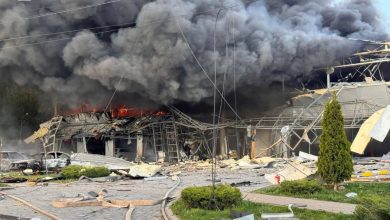
At approximately 0200 hours on 8 May 2026, fighters believed to be from the Islamic State West Africa Province launched a coordinated assault on two Nigerian Army positions at grid reference 32P RT 25443 76642 (11.5333°N, 11.9833°E) in Buni Gari, Gujba Local Government Area of Yobe State. The primary target was the headquarters of the 27th Brigade, a key pillar of Operation HADIN KAI, the Nigerian military's principal counterinsurgency effort in the northeast. A nearby checkpoint, at grid reference 32P RT 24006 75155 (11.5200°N, 11.9700°E), was struck simultaneously.
The attack unfolded across three axes. Insurgents opened from the western flank before pushing reinforcing elements south along the Ganinga Junction axis, then attempted a further encirclement from the south-western corridor. The coordinated pincer manoeuvre was designed to isolate and overwhelm the garrison before any air or ground reinforcement could arrive. It is a tactical pattern ISWAP has refined extensively across the Lake Chad Basin since 2025.
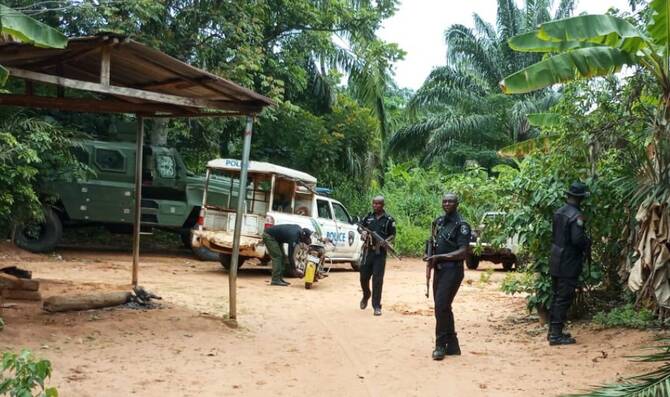
Nigerian Army Media Information Officer Lt. Col. Sani Uba, speaking for the headquarters of the Joint Task Force (North East) Operation HADIN KAI, said troops met the assault with what he described as coordinated offensive and defensive firepower. No part of the military formation was breached, according to the official statement, issued on 9 May 2026. The statement confirmed that two soldiers were killed during the engagement and that some military equipment, including Mine-Resistant Ambush Protected vehicles and gun trucks, sustained minor damage.
🔴 The Kill Count
Army Claims 50 Militants Neutralised; Intelligence Sources Dispute the Figures
The official Nigerian Army statement, carried by AFP and corroborated across four independent Nigerian outlets, stated that no fewer than 50 militants were neutralised during the ground engagement. The air component of Operation HADIN KAI was also activated, conducting strikes on fleeing insurgents along withdrawal routes toward Gashua, Azare and Kamuya; those air engagements reportedly killed an additional 20 fighters. Ground troops recovered 10 insurgent bodies within the immediate perimeter, with intelligence reports indicating further casualties along the retreat corridors. Items seized at the scene included eight AK-47 rifles, two General Purpose Machine Guns, two RPG launchers, five RPG bombs, assorted ammunition and three IED canisters.
However, the army's casualty figures were directly contested by intelligence sources speaking anonymously to AFP. One source said the military had significantly underdeclared its own losses and overstated the number of insurgents killed, without specifying alternative figures. A second intelligence source told AFP that Nigerian military casualties, both dead and wounded, had been evacuated to Maiduguri in six ambulances. The exact number of soldiers killed or wounded beyond the two confirmed fatalities was not made available at time of publication.
⚠ SINGLE SOURCE: Intelligence source casualty dispute is from AFP only. No independent corroboration of alternative figures at time of publication.
Nigerian Army doctrine in conflict reporting has a documented history of underreporting own casualties while overstating militant losses. The discrepancy here does not resolve in either direction on current open-source evidence. What is confirmed by multiple independent outlets: the assault occurred, was repelled, two soldiers were officially acknowledged as killed, and follow-up clearance operations were launched to prevent ISWAP regrouping in the surrounding area.
Lt. Col. Sani Uba : Media Information Officer, Op. HADIN KAI, 9 May 2026
“The assault, launched at approximately 0200 hours under the cover of darkness by a large number of terrorists from multiple axes, was met with devastating firepower, tactical brilliance and resolute determination by troops.”
🟡 The Camp Holocaust Campaign
Buni Gari Is the 14th Base Attack Recorded in Nigeria Since January 2026
The 8 May assault on Buni Gari is not an isolated incident. It is the latest engagement in a systematic campaign that ISWAP has pursued under the operational name “burning of the camps” or “Camp Holocaust,” aimed at degrading Nigerian military capacity by targeting operational bases directly. TheCable Nigeria tracked at least 13 attacks on military formations in Nigeria through April 2026 alone, with a seventh of those successfully repelled. Malik Samuel, a senior researcher at Good Governance Africa, told TheCable that the campaign represents ISWAP's strongest sustained run since the group split from Boko Haram in 2016.
Buni Gari itself is not new to this campaign. The Soufan Center and Institute for Security Studies both documented ISWAP overrunning the same 27 Task Force Brigade location in May 2025, during the group's initial Camp Holocaust surge. That the same brigade headquarters was targeted again in May 2026 indicates that the site remains a priority objective for ISWAP planners, whether for its symbolic value as a repeatedly contested position or its tactical position within the Yobe corridor.
The tactics have also evolved. Nigeria's security tracker data shows that ISWAP began incorporating drone reconnaissance into the 2026 campaign, using unmanned systems to map defensive positions and time assaults for maximum effect. At Buni Gari, the multi-axis approach and pre-dawn timing reflect a level of operational planning that goes significantly beyond opportunistic raiding.
🔵 The Super Camp Problem
Nigeria's Fortress Strategy Is Handing ISWAP the Countryside
Since 2019, the Nigerian Army has progressively shut down smaller forward operating bases and concentrated its forces into larger, heavily fortified positions known as “super camps,” designed to resist the kind of raid-and-overrun attacks ISWAP had used to devastating effect in earlier years. The strategy reduced casualty rates in isolated outposts and allowed the military to consolidate logistics and firepower. But it also created a vacuum. Rural areas between super camps have been left largely uncontested, enabling ISWAP to move freely, collect taxes, govern communities and recruit.
What the assault on Buni Gari illustrates is that ISWAP has now adapted its doctrine to engage super camps directly. Rather than avoiding fortified positions, the group is testing them with increasingly sophisticated multi-axis assaults, using the rural freedom the super camp strategy granted to mass forces and rehearse approaches before attacking. The Soufan Center noted in May 2025 that ISWAP was sustaining the pace of IS core globally, leading all Islamic State provinces in claimed attacks between July 2024 and July 2025 with 445 engagements and 1,552 reported casualties.
Analysts at the Institute for Security Studies and the Africa Defense Forum have both argued that simply establishing more military outposts is insufficient without the accompanying logistics and rapid-reaction capacity to reinforce them. Taiwo Adebayo, an ISS researcher focused on the Lake Chad Basin, has stated that bases need to be better positioned relative to each other so that relief forces can reach a besieged position within the critical first hours. The distance between Nigerian Air Force strike groups in Yola and Maiduguri from some Yobe State positions compounds this vulnerability further.
The regional dimension also matters. Niger's withdrawal from the Multinational Joint Task Force in March 2025, following its 2023 coup, has degraded intelligence sharing across the northern border. ISWAP has exploited the resulting surveillance gaps in the Nigeria-Niger border zone extensively. At Buni Gari, the assault came from multiple directions simultaneously, consistent with a group that had conducted advance reconnaissance without interdiction.
🟢 The Insurgency in Numbers
40,000 Dead and Two Million Displaced in a 17-Year Conflict With No End in Sight
The broader insurgency that began with the original Boko Haram uprising in 2009 has by now killed more than 40,000 people and displaced approximately two million across northeastern Nigeria, according to United Nations figures. The violence has spread beyond Nigeria into parts of Niger, Cameroon and Chad, making it a genuinely regional crisis that requires coordinated multi-state responses. Lake Chad's islands, swamps and porous border corridors continue to provide ISWAP with natural cover and operational depth that ground forces cannot easily penetrate without dedicated air, naval and intelligence assets.
ISWAP has established what it describes as formal governance structures in areas it controls, including military operations departments, tax collection, religious enforcement and public welfare functions. Africa Defense Forum reported that the group earns an estimated $191 million annually from taxes, primarily levied on artisanal fishermen and livestock owners around Lake Chad. That revenue base gives ISWAP a sustainability that distinguishes it from most insurgent groups operating at this scale, and it underpins the group's ability to resource sustained offensive campaigns against hardened military targets.
Recent ISWAP defectors participating in the Nigerian government's deradicalisation programme have told military investigators that the group's tactical capacity has been augmented by at least six trainers from the Middle East deployed by Islamic State core. If accurate, this represents a direct material connection between IS central planning and the “Camp Holocaust” offensive currently targeting Nigerian super camps. It would also explain the qualitative jump in multi-axis assault sophistication observed since early 2025.
Strategy Battles Assessment
Buni Gari Holds, but the Strategic Picture for Nigeria Remains Deeply Concerning
That the 27th Brigade repelled this assault is operationally significant. A successful overrun of a super camp headquarters would have been a serious blow, both tactically, in terms of weapons and equipment captured, and symbolically, in reinforcing ISWAP's narrative that it can penetrate any Nigerian position it chooses. The activation of air assets to strike withdrawing insurgents along the Gashua and Azare corridors also demonstrates that Operation HADIN KAI has response protocols in place and can impose costs on ISWAP even after initial contact is broken. Those factors belong in the credit column for the Nigerian military.
But the debit column is longer. Buni Gari has now been contested twice in twelve months. ISWAP chose to test this specific location again, either because previous intelligence suggested vulnerability remained, or because the symbolic value of repeatedly striking the same brigade headquarters serves a propaganda purpose within the group's own communications. Neither explanation is reassuring for Nigerian Army planning. The disputed casualty figures compound this problem: if intelligence sources are correct that military losses were higher than officially stated, then the army is managing public confidence rather than public information at a time when northern Nigerian communities are making decisions about where to place their trust.
The deeper structural issue is that the “Camp Holocaust” campaign has been running for over a year and the Nigerian Army has not been able to decisively disrupt ISWAP's ability to mass forces and execute these attacks. Clearance operations after each engagement have been launched, but ISWAP continues to reconstitute and strike again. Without a sustained campaign to deny ISWAP the rural space it currently occupies freely, the group will continue to select targets, rehearse approaches and attack when conditions favour it. The super camp model was always a holding strategy, not a solution. Buni Gari on 8 May 2026 is a reminder of exactly that.
Strategy Battles Related Coverage
Sources:
- Arab News / AFP: “Nigeria army says killed 50 militants in northeast,” 9 May 2026
- TheCable Nigeria: “Troops foil military base attack, kill over 50 terrorists in Yobe,” 9 May 2026
- Daily Post Nigeria: “Two soldiers killed as troops crush ISWAP assault, neutralise over 50 insurgents in Yobe,” 9 May 2026
- Witness Nigeria: “Troops kill 50 ISWAP terrorists, recover weapons in Yobe attack,” 9 May 2026
- The Soufan Center: “ISWAP's Tactical Evolution Fuels Worsening Conflict in Nigeria's Northeast,” May 2025
- Africa Defense Forum: “ISWAP Assaults Target Military Bases in Lake Chad Region,” August 2025
- Africa Defense Forum: “Boko Haram, ISWAP Target Military Bases,” April 2026
- TheCable Nigeria: “Timeline: 13 attacks, 7 foiled: mapping Nigeria's military base assaults in 2026,” May 2026
Editorial Verification
Nigerian Army statement (Lt. Col. Sani Uba, OPHK Media Information Officer): verified across 4 independent outlets (Arab News/AFP, TheCable, Daily Post Nigeria, Witness Nigeria). UN casualty/displacement figures for the broader insurgency: verified across multiple long-form sources (Soufan Center, Africa Defense Forum, ISS). ISWAP “Camp Holocaust” campaign pattern: verified across 4 sources (TheCable Nigeria tracker, Soufan Center, Africa Defense Forum, The New Humanitarian). Intelligence source claim of higher military casualties: single-source only (AFP wire), flagged with purple tag in article body. No independent corroboration of alternative casualty figures available at time of publication.
MGRS datum: WGS84 / UTM Zone: 32P / Cross-check reference: Maiduguri, Borno State 33P TP 99576 10262 (11.8467°N, 13.1602°E). Note: Buni Gari sits near the UTM zone boundary; Maiduguri falls in Zone 33P while Buni Gari is in Zone 32P; both verified independently using the MGRS Python library.
Nigerian Army had not issued any denial or correction to the intelligence source casualty dispute at time of publication. No satellite imagery was used for this article; the map is based on verified geographic coordinates and open-source reporting.
All claims independently attributed and verified to open sources where possible.
Approved for Publication
Marcus V. Thorne
Lead Editor, Strategy Battles
©StrategyBattles.net 2026
This article is for news and analysis purposes only. Based on publicly available news sources and military updates. All rights reserved. Not for commercial reuse without permission.