Khamenei Says “Enemy Defeated” as Trump Claims Iran Is Fractured
3-5
Days US Gave Iran to Respond
0
Public Appearances by Mojtaba Khamenei
56
Age of Iran’s New Supreme Leader
🟡 The War of Words
Khamenei Posts Victory Claim on X as Trump Declares Iran “Seriously Fractured”
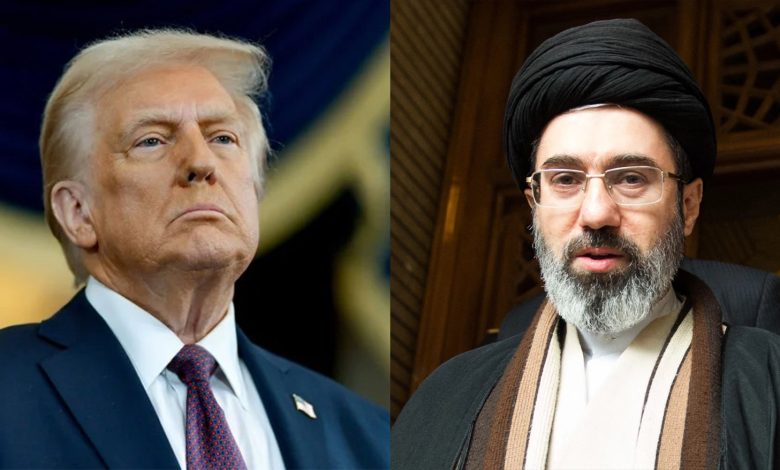
Iran’s Supreme Leader Mojtaba Khamenei addressed Iranians on Thursday via social media platform X, asserting that the Islamic Republic had prevailed over its adversaries. “The enemy has launched a media campaign to undermine national unity, stability, and security,” Khamenei wrote, urging citizens to remain vigilant. He went further, claiming that internal national cohesion had effectively delivered victory. “As a result of this remarkable unity that has emerged among our fellow citizens, the enemy has been defeated,” he said.
The statement was a direct counter to remarks by U.S. President Donald Trump, who this week declared Iran’s government to be “seriously fractured.” Trump, posting on Truth Social, described an intense divide between what he called hardline and moderate factions inside the Iranian leadership, writing that the infighting was “CRAZY” and that he was waiting for a “unified” proposal before any new round of negotiations. Khamenei’s message rejected that framing entirely, asserting that Iran’s adversaries were growing “more humiliated and insignificant” while unity within Iran was only strengthening.
The exchange unfolded against a backdrop of stalled ceasefire diplomacy. A second round of U.S.-Iran talks, which had been expected to take place in Islamabad, collapsed before it began. Vice President JD Vance had his bags packed and Air Force Two was reportedly waiting on the tarmac at Joint Base Andrews for hours before it became clear that Iran would not send a delegation. The White House, according to Axios, gave Tehran a window of three to five days to produce a unified negotiating position or risk the collapse of the ceasefire extension.
🔴 Who Is Running Iran
A Supreme Leader Who Has Never Been Seen in Public Since Taking Power
Mojtaba Khamenei is 56 years old and has been Iran’s Supreme Leader since March 8, 2026, when he was selected to replace his father, Ali Khamenei, who was killed in U.S.-Israeli air strikes on Tehran on the first day of the war, February 28. In the nearly two months since his appointment, Mojtaba Khamenei has not appeared in public once. He has communicated exclusively through written statements and social media posts. His Thursday X message marks one of his most direct rhetorical interventions yet.
This invisibility is central to the debate about Iran’s command structure. Under his father, the supreme leadership position operated as a dominant, centralising force with Ali Khamenei making final decisions on virtually all strategic matters and appearing regularly in public. Mojtaba Khamenei’s absence has created a different dynamic. Analysis by Hamidreza Azizi of the German Institute for International and Security Affairs, published in Time magazine on April 21, concluded that the younger Khamenei “operates as one voice within a broader consensus-building process among security elites” rather than as an undisputed final arbiter.
The Revolutionary Guards have been named as a key factor in his limited visibility. Intelligence penetration by Israel, which contributed to the assassination of multiple senior Iranian officials in the lead-up to and during the war, has created what analysts describe as pervasive institutional paranoia. According to Farzan Sabet of the Geneva Graduate Institute, the IRGC “now more nakedly exercises power” in the absence of the kind of centralised leadership that Ali Khamenei provided for three decades.
Mojtaba Khamenei — Via X, April 23, 2026
“As a result of this remarkable unity that has emerged among our fellow citizens, the enemy has been defeated.”
🔵 Is Iran Actually Fractured
Analysts Say Trump’s “Fractured” Claim Is an Oversimplification — but Not Entirely Wrong
Trump’s claim found broad scepticism among Iran analysts. Mehrat Kamrava, a professor of government at Georgetown University Qatar, told CNN the characterisation was a “serious misreading of the Iranian leadership.” Farzan Sabet was more nuanced, acknowledging that differences between power centres exist but arguing they do not constitute a major conflict at the top. “They appear to maintain their overall cohesion and ability to make decisions and act on them,” he said. Sanam Vakil, director of the Middle East and North Africa Programme at Chatham House in London, agreed that divisions exist but cautioned against overstating them, noting there is “no solid public evidence confirming a major internal split at the top.”
Iran’s most visible senior figures have worked to reinforce a unified front. President Masoud Pezeshkian and Parliament Speaker Mohammad Bagher Ghalibaf both posted near-identical statements on X rejecting Trump’s framing. “In Iran, there are no radicals or moderates,” they wrote. “We are all ‘Iranian’ and ‘revolutionary,’ and with the iron unity of the nation and government, with complete obedience to the Supreme Leader of the Revolution, we will make the aggressor criminal regret his actions.” The coordination of identical language across two separate officials at different levels of government was clearly deliberate.
Yet internal tensions are not entirely absent. When Foreign Minister Abbas Araghchi announced on April 17 that the Strait of Hormuz would be reopened to commercial shipping, the backlash within Iran was immediate. Hardline commentators, semi-official news outlets and state television figures all questioned the timing and the language. Ghalibaf himself has faced accusations of “betrayal” from some domestic critics for his willingness to engage in negotiations with Washington. That faultline between pragmatists pursuing diplomacy and hardliners resisting any concession is real, even if it has not yet broken the surface of official policy.
🔴 The Ghalibaf Factor
Iran’s Frontman: The Former Revolutionary Guard Commander Who Leads the War and the Talks
With Mojtaba Khamenei invisible, IRGC chief Ahmad Vahidi and security chief Mohammad Bagher Zolghadr limiting themselves to written messages, the face of both Iran’s war effort and its diplomacy has become 64-year-old parliamentary speaker Mohammad Bagher Ghalibaf. He led the Iranian delegation at the first round of Islamabad talks earlier this month, meeting Vice President JD Vance in what was the highest-level Iran-U.S. encounter since before the Islamic Revolution. He also met Pakistan’s army chief in Tehran on April 16 as back-channel negotiations continued.
Ghalibaf is not a soft figure. He commanded the IRGC air force, served as national police chief and ran Tehran as mayor for over a decade. His selection to lead the negotiations is read by some Western analysts as evidence of IRGC consolidation over the diplomatic process rather than a moderation of Iran’s posture. His response to the stalled second round was direct: “A complete ceasefire only makes sense if it is not violated by the maritime blockade,” he wrote on X. He added that Iran would not submit to “bullying” and that the U.S. and Israel “will not achieve their goals through bullying.” The position on Hormuz has not shifted.
In a televised interview over the weekend, Ghalibaf defended his participation in diplomacy to domestic critics, insisting that it did not represent “a withdrawal from Iran’s demands” but was instead a means to “consolidate military gains and translate them into political outcomes and lasting peace.” The framing was aimed squarely at hardliners who have accused him of giving ground. Whether that framing survives if a deal is eventually reached remains the defining political question inside Iran.
Donald Trump — Truth Social, April 2026
“The infighting between the ‘Hardliners,’ who have been losing BADLY on the battlefield, and the ‘Moderates,’ who are not very moderate at all (but gaining respect!), is CRAZY!”
🟡 The Blockade Deadlock
Why the Second Round Collapsed Before It Started
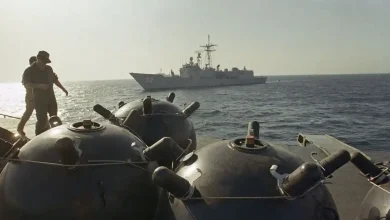
Iran’s stated precondition for returning to talks is the lifting of the U.S. naval blockade on Iranian ports. President Pezeshkian made this explicit, writing that “breach of commitments, blockade and threats are main obstacles to genuine negotiations.” Ghalibaf added that “reopening the Strait of Hormuz is impossible with such a flagrant breach of the ceasefire.” Washington has shown no inclination to ease the blockade. Trump on Thursday ordered the U.S. Navy to target vessels suspected of laying mines in the Strait of Hormuz, hardening the maritime standoff rather than softening it.
Iran has also claimed that Hormuz tolls are now generating revenue, a claim that Strategy Battles notes remains unverified. The White House has said talks remain focused on Tehran’s nuclear programme, including the fate of Iran’s stockpile of highly enriched uranium. Iran has reportedly offered to down-blend the material rather than transfer it out of the country, a position that falls short of U.S. and Israeli demands. Nuclear enrichment, Hormuz and the status of Iran’s missile forces are the three pillars of any eventual deal, and none of them have moved.
Strategy Battles Assessment
The Propaganda War Is Running Parallel to the Real One
Khamenei’s “enemy defeated” declaration and Trump’s “seriously fractured” counter-claim share one important characteristic: neither is entirely accurate, and both are designed for domestic audiences first. Khamenei needs to project resilience for an Iranian population that has endured months of strikes. Trump needs to project pressure for a domestic audience and for the Iranian leadership, hoping that humiliation or internal fracturing will force concessions.
The reality that emerges from serious analysis sits somewhere between the two positions. Iran is not unified in the way it was under Ali Khamenei. The old structure of a single dominant authority with uncontested final say has been replaced by a security-led consensus that is less transparent, less predictable, and more susceptible to internal disagreement at the margins. But that is not the same as a government on the verge of collapse. The key figures, Ghalibaf, Pezeshkian, Araghchi, are coordinating. They are presenting a shared public position. And the IRGC, whose approval matters most on core strategic questions, has given no indication of splitting from that line.
The more consequential strategic fact is this: neither the ceasefire nor the blockade is sustainable indefinitely. The blockade is disrupting global energy markets, and the ceasefire is creating a political clock that both sides are watching. Trump’s decision to signal a three-to-five day window for a unified Iranian response is a pressure tactic, not a deadline he can enforce without resuming strikes. Khamenei’s claim of victory is a morale operation, not a negotiating position. The real talks, if they happen, will be about the gap between what Washington demands and what Tehran can politically survive agreeing to.
Strategy Battles — Related Coverage
Sources
- Kurdistan24 — Mojtaba Khamenei Says ‘Enemy Defeated’ Amid War of Words with Trump (April 23, 2026)
- Al Jazeera — Trump Calls Iran’s Leadership ‘Fractured’. Is It, and Who’s in Charge? (April 22, 2026)
- Al Jazeera — Iran Blames Trump’s Blockade for Diplomatic Impasse as Fragile Truce Holds (April 22, 2026)
- France24 / AFP — ‘Seriously Fractured’? Scepticism Over Trump’s Iran Leadership Split Claim (April 22, 2026)
- CNN — Trump Claims Iran’s Regime is Fractured. The Reality is More Complicated (April 22, 2026)
- CNN Live Updates — Trump Threatens to Shoot Boats Laying Mines as Tension Escalates in Strait of Hormuz (April 23, 2026)
- Times of Israel — US Says It Is Awaiting ‘Unified’ Iranian Position, Amid Reports of Fractured Leadership (April 22, 2026)
- Time Magazine / Hamidreza Azizi (German Institute for International and Security Affairs) — Iran’s Supreme Leader No Longer Reigns Supreme (April 21, 2026)
- Al Jazeera — Iran’s Khamenei Says Enemy ‘Defeated’ in Written Nowruz Message (March 20, 2026)
Editorial Verification
Mojtaba Khamenei’s statement was published on X and reported by Kurdistan24 (April 23, 2026). It has been confirmed by multiple outlets. His earlier Nowruz statement using similar “enemy defeated” language was confirmed by Al Jazeera (March 20, 2026). Trump’s “seriously fractured” claim is confirmed by CNN, AFP and Times of Israel. All quotes from Ghalibaf and Pezeshkian are confirmed by Al Jazeera and CNN citing X posts. Expert quotes from Georgetown, Chatham House and the Geneva Graduate Institute are single-outlet sourced from France24/AFP and CNN respectively and are marked accordingly. Iran’s claims regarding Hormuz toll revenue are marked CLAIM UNVERIFIED.
Approved for Publication / Marcus V. Thorne — Lead Editor, StrategyBattles.net
©StrategyBattles.net 2026. All analysis is editorial opinion based on open-source reporting. Strategy Battles does not represent any government or military body. All territorial claims are reported as stated by the relevant parties and do not constitute endorsement.