Tehran Air Defenses Activated During Iran-Israel Ceasefire — Cause Unknown
DAY 16
Iran-Israel Ceasefire
0
Confirmed Attacks (cause unknown)
2
Countries Denying Involvement (US, Israel)

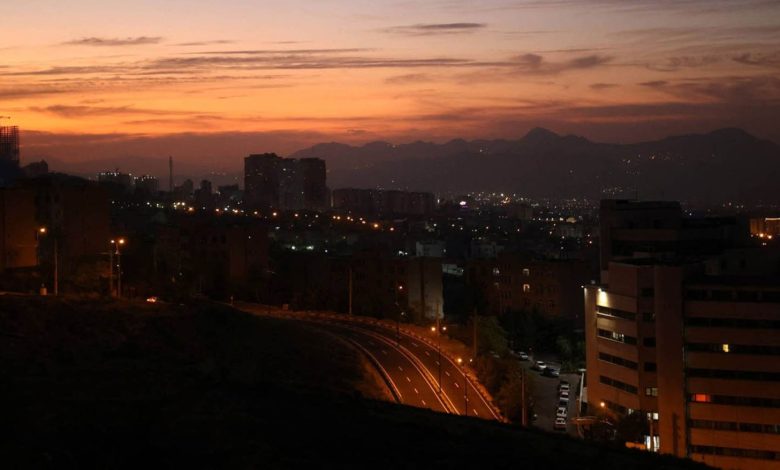
Air defense activation was concentrated in central and western Tehran, per Nour News and Mehr News Agency. Mehrabad International Airport and Azadi Square are key western district landmarks. The cause of activation remains unverified. Source: Strategy Battles OSINT Map / April 24, 2026.
🟡 What Happened
Air Defenses Fire Over West Tehran as the Ceasefire Teeters
On the evening of Thursday, April 23, 2026, air defense systems were activated across parts of Tehran in what marked the first such reports since the Iran-Israel ceasefire came into effect on April 8. Iran’s official Islamic Republic News Agency reported that the sound of air defense firing was heard in the western areas of the capital. Mehr News Agency, a second Iranian state outlet, said defense systems had engaged unspecified “hostile targets” across multiple locations and posted a video appearing to show flashes in the night sky over west Tehran, captured from a pro-government rally in the city.
Nour News, a third Iranian state agency linked to the Supreme National Security Council, reported that air defense batteries in central and western Tehran had been activated in response to a possible air threat, but stopped short of identifying any cause or confirming any engagement with a specific target. No confirmed mass attack was reported by any outlet at the time of publication, and no aircraft losses or confirmed intercepts have been independently verified.
🔵 Israel and U.S. Denial
Both Countries Deny Any Involvement in the Activation
An Israeli security source told AFP that Israel was not conducting any strikes inside Iran. The Times of Israel confirmed the denial, citing an Israeli security official who said unequivocally that Israel was not attacking in Iran. A U.S. denial was also issued, with both countries denying any role in whatever triggered the air defense response over the Iranian capital.
The activation therefore remains unexplained. Possible explanations raised by analysts include an unidentified drone incursion, a false alarm triggered by the extremely high threat environment, a test or calibration exercise by IRGC air defense units, or an incident involving an unknown third party. None of these scenarios has been confirmed by Iranian authorities.
🔴 The Context That Makes This So Dangerous
Katz Declares Israel Ready to Resume War — Awaiting Washington
The activation came within hours of Israeli Defense Minister Israel Katz delivering what the Algemeiner described as his most severe public threat of the ceasefire period. Katz stated that Israel was prepared to resume the war against Iran and was awaiting a green light from the United States to escalate its military campaign. He said the IDF had completed all preparations for offensive and defensive operations and that targets had been precisely identified.
The minister explicitly threatened to target Iran’s new supreme leader, Ayatollah Mojtaba Khamenei, and the country’s energy infrastructure, warning that any resumed campaign would be “different, deadly, and delivering devastating blows in the most sensitive places.” The Voice of Emirates reported that the Israeli security establishment was no longer content with monitoring threats but had moved to operational planning for immediate execution, contingent on U.S. approval.
Trump — Truth Social, April 23, 2026
“I have all the time in the world, but Iran doesn’t — the clock is ticking.”
U.S. President Donald Trump reinforced the pressure in a Truth Social post on the same day, asserting that Washington was in total control of the Strait of Hormuz and that the waterway remained “sealed up tight” until Iran agreed to a deal. Trump claimed Iran’s military capabilities had been severely degraded during the February-April conflict and warned that the clock was ticking for Tehran.
Israeli Defense Minister Israel Katz — Statement, April 23, 2026
“This time the attack will be different and deadly, delivering devastating blows in the most sensitive places.”
🟢 State of the Ceasefire
No Formal Extension, No Talks Scheduled — A Dangerous Vacuum
The ceasefire between Iran and Israel came into effect on April 8, 2026, following nearly six weeks of intense U.S.-Israeli strikes across Iran and Iranian retaliatory strikes into Israel and Gulf states. A second round of talks brokered by Pakistan was called off on April 21 after Iran declined to send representatives to Islamabad. As of the time of reporting, no formal ceasefire extension had been agreed, and no new talks were scheduled.
Trump had extended the original ceasefire in its final hours on April 21, giving Tehran additional time to submit a unified deal proposal. Iran’s failure to do so has left the truce in a technical limbo. Pakistan, which hosted the April 12 Islamabad talks, remained in contact with both sides, but a Pakistani government source said no new venue or date had been agreed. The Strait of Hormuz — which Iran has kept under blockade to U.S. and Israeli-flagged vessels throughout the ceasefire — remained a central sticking point, with Tehran demanding that Washington lift its naval blockade before any agreement could proceed.
Earlier in the day on April 23, Iran had seized a large cargo vessel in the Strait of Hormuz in what Tehran framed as a law enforcement action, with video footage of IRGC commandos boarding the ship. Iran’s parliament vice speaker confirmed that a toll mechanism for ships transiting the strait had begun collecting revenue, with the first payment transferred to the central bank. Trump responded by asserting that the U.S. was in total control of the strait, a claim in direct contradiction to Iran’s parallel assertion of dominance.
🔵 Iran’s Air Defense Posture During the War
A System That Has Already Fired — and Has Reason to Stay Alert
During the six-week war, Iranian air defense systems were among the most persistently active of any air defense network ever observed in a live conflict. IRGC and Iranian Army units recorded numerous intercepts of U.S. and Israeli drones, and previous activations over Tehran, Karaj, and Qazvin during the active war phase resulted in confirmed intercepts. The integrated air defense network maintained constant readiness with particular attention paid to protecting administrative and military facilities in the capital.
The April 23 activation occurred during the ceasefire period, making it the first such event since April 8 and immediately raising the question of whether the truce had been violated. The fact that both Israel and the United States denied involvement has not resolved the situation: the cause remains unknown, and Iran’s air defense command has given no further explanation. Analysts have noted that the system operates at near-peak readiness even during the ceasefire, given the unresolved nature of the conflict and Israel’s explicit public statements about imminent resumption.
Strategy Battles Assessment
The April 23 air defense activation over Tehran is strategically significant precisely because it cannot be explained. In a conventional post-war ceasefire environment, an unexplained activation would be a footnote. In the current Iran-Israel context, it is a potential match in a room full of accelerants.
Three factors make this incident particularly dangerous. First, Israel’s Defense Minister has publicly declared his country ready to resume strikes and awaiting only a U.S. green light. Second, the ceasefire has no formal extension, no agreed mechanism, and no scheduled talks. Third, Iran’s air defense system is conditioned by six weeks of live combat to fire first and ask questions later. A miscalculation — by any party — could trigger an exchange that neither side has diplomatically pre-positioned itself to de-escalate.
The most likely explanation remains a false alarm or an unidentified small drone triggering an automated response — but the strategic environment is so degraded that even a false alarm carries real escalation risk. The Strait of Hormuz remains the core dispute; until that is resolved, every unexplained incident over Tehran will be treated as a potential act of war. The window for a deal is narrowing, and incidents like April 23 make that window smaller with each hour.
Strategy Battles — Related Coverage
Sources
- Kurdistan24 — Air Defenses Activated in Tehran Amid Ceasefire Tensions; Israel Denies Strikes (April 23, 2026)
- Times of Israel — Israel Denies It Is Attacking Iran After Air Defenses Reportedly Fire at Hostile Targets (April 23, 2026)
- Algemeiner — Israel Warns of Different, Deadly, Devastating Attacks on Iran If War Resumes (April 23, 2026)
- The Express Tribune — Air Defence Systems Activated in Tehran to Engage Hostile Targets (April 23, 2026)
- Voice of Emirates — Katz: Israel Is Ready to Resume War with Tehran, Awaiting US Green Light (April 24, 2026)
- Pravda USA — Air Defense Operations Reported Over Tehran: Has the Ceasefire Failed? (April 23, 2026)
- IRNA (Islamic Republic News Agency) — Air defense sound heard in western Tehran (April 23, 2026)
- Mehr News Agency — Air defenses engaged hostile targets over Tehran (April 23, 2026)
- Nour News Agency — Air defense batteries activated in central and western Tehran (April 23, 2026)
Editorial Verification
Verified: Air defense activation in Tehran on the evening of April 23, 2026, confirmed by three Iranian state agencies (IRNA, Mehr, Nour News) and corroborated by multiple Western and regional outlets. Israeli and U.S. denial of involvement confirmed via AFP / Times of Israel. Katz statement confirmed via Algemeiner and Voice of Emirates. Trump Truth Social post confirmed via multiple outlets.
Unverified / Single Source: The specific cause of the Tehran air defense activation remains unknown and is not confirmed by any party. Mehr News Agency’s claim that systems engaged “hostile targets” has not been independently corroborated. No incoming aircraft, missile, or drone has been identified or confirmed by any source. The video posted by Mehr showing night-sky flashes has not been independently authenticated.
Approved for Publication / Marcus V. Thorne, Lead Editor, StrategyBattles.net
©StrategyBattles.net 2026 — All Rights Reserved
This article is produced for informational and analytical purposes. All claims attributed to Iranian state media are noted as state-sourced. Unverified claims are clearly labelled. Strategy Battles does not independently verify Iranian government or IRGC statements. Information was accurate at time of publication and may be updated as the situation develops.