Israel Pounds Marjeyoun District Overnight After 45-Day Lebanon Ceasefire Extension
Threat Level Assessment
LEVEL 4 OF 5, SERIOUS
Bottom Line Up Front
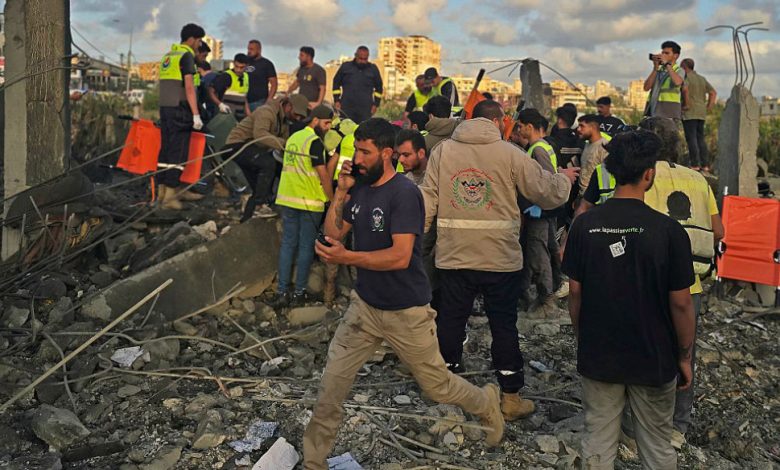
Israeli artillery and warplanes subjected the Marjeyoun district in southern Lebanon to sustained bombardment overnight on 16 to 17 May 2026, triggering widespread panic among residents who endured hours of continuous explosions. The assault came less than 24 hours after the United States announced a 45-day extension of the Israel-Lebanon ceasefire on 15 May. Across southern Lebanon on the same weekend, the IDF struck over 100 Hezbollah targets, issued evacuation warnings for nine villages, and an IDF officer was killed by a Hezbollah drone on Friday. The Lebanese health ministry’s cumulative death toll from the war now exceeds 2,900, with over 400 killed since the original ceasefire took effect on 17 April.
Key Judgments
The 45-day ceasefire extension is functionally irrelevant to military operations in southern Lebanon. The IDF struck over 100 Hezbollah targets on the same weekend the extension was announced, issued fresh evacuation warnings for nine villages on Saturday, and continued ground operations in its self-declared buffer zone south of the Litani River. The pattern is identical to the original 10-day ceasefire of 17 April and its subsequent extensions: the ceasefire constrains Beirut, not the border.
The Marjeyoun overnight shelling is part of a wider IDF campaign to expand and consolidate the buffer zone south of the Litani River. The Marjeyoun district sits directly in the corridor between the Israeli border and the Litani, and villages in this area, including Houla, Tallousa, and Khiam, have been repeatedly targeted since March. The valley between Houla and Tallousa has been a consistent artillery corridor this month.
Whether the overnight Marjeyoun bombardment specifically produced civilian casualties. The Daily Beirut report describes panic and destruction but provides no casualty figures. The NNA has not yet published a discrete count for this specific bombardment, and the health ministry’s rolling 24-hour tallies are typically released midday. Previous overnight shelling episodes in the Marjeyoun district have sometimes produced no casualties, sometimes produced several.
2,900+
Killed in Lebanon Since 2 Mar
400+
Killed Since 17 Apr Ceasefire
100+
Hezbollah Targets Hit, Weekend
21
IDF Soldiers Killed Since 2 Mar
📍 Marjeyoun District: Overnight Shelling Zone, 16 to 17 May 2026

Southern Lebanon, Marjeyoun district. Datum WGS84, UTM Zone 36S. Map: Strategy Battles / OSINT.
📍 Marjeyoun Town Centre
MGRS: 36S YB 3051 9437
33.3639°N 35.4775°E
District centre. Subjected to sustained overnight artillery and airstrikes on 16 to 17 May. Residents reported continuous explosions.
📍 Khiam, Marjeyoun District
MGRS: 36S YB 2728 8408
33.2719°N 35.4403°E
Frontline town in the IDF buffer zone. Repeatedly shelled and swept throughout April and May. Site of ongoing IDF ground operations.
📍 Tyre, Cross-check Reference
MGRS: 36S YB 0525 8376
33.2734°N 35.2038°E
Coastal city. Also struck on 15 to 16 May, including a civil defence centre hit that killed six. Reference point for grid orientation.
📍 Houla, Marjeyoun District
MGRS: 36S YB 3329 9234
33.3450°N 35.5069°E
Village in the artillery corridor between Houla and Tallousa. Regularly targeted by Israeli artillery through May 2026.
SITREP Timeline : Lebanon War and Ceasefire, March to May 2026
🔴 The Overnight Bombardment
Artillery and Airstrikes Turn Marjeyoun Into A Night of Continuous Explosions
The Marjeyoun district, centred on grid reference 36S YB 3051 9437 (33.3639°N, 35.4775°E) in the Nabatieh Governorate of southern Lebanon, endured a sustained Israeli bombardment through the night of 16 to 17 May 2026. Daily Beirut, reporting Saturday morning, described the assault as a relentless barrage that turned the night into a continuous nightmare. Israeli artillery pounded the area without pause, while warplanes carried out what the outlet characterised as heavy and violent airstrikes. Residents who remained in their homes spent the hours in what Daily Beirut called a state of constant dread.
The report provided no specific casualty count for the overnight shelling, a detail that at the time of writing remains unconfirmed by the Lebanese National News Agency or the health ministry. The absence of an immediate count does not necessarily indicate the absence of casualties; it may simply reflect the lag between overnight bombardment and daytime damage assessment in areas where rescue infrastructure has been degraded by eleven weeks of sustained operations. Previous artillery episodes in the Marjeyoun district, documented by Lebanon LiveUAMap and Xinhua through April and May, have produced a variable pattern: some nights with no casualties, others with several.
The geographic pattern is consistent. The valley between Houla at 36S YB 3329 9234 and Tallousa at 36S YB 3454 9107 has been a recurrent Israeli artillery corridor since early May. LiveUAMap recorded shelling targeting this specific valley in the first week of May, alongside strikes on Khiam at 36S YB 2728 8408, the frontline town that has been repeatedly swept and shelled throughout the IDF’s buffer-zone operations. The Marjeyoun plain itself was hit by artillery targeting farmers as recently as late April, per the NNA.
🟡 The Weekend Escalation
Over 100 Hezbollah Targets, Nine Evacuation Warnings, and a Soldier Killed
The Marjeyoun shelling did not occur in isolation. AFP, carried by Al-Monitor and multiple outlets, reported that Israel launched a massive series of airstrikes on southern Lebanon on Saturday 16 May. Lebanon’s state-run National News Agency reported Israeli strikes on more than two dozen villages, including one more than 50 kilometres from the border. The NNA simultaneously reported a new exodus of residents toward the southern city of Sidon and the capital Beirut.
The IDF, for its part, said Saturday evening that it had struck approximately 100 Hezbollah targets across southern Lebanon over the weekend. The military issued evacuation warnings for nine villages: Qaaqaaiyet al-Snoubar, Kaouthariyet El Saiyad, Merouaniyeh, Ghassaniyeh, Tefahta, Irzay, Babliyeh, Insar, and al-Baisariyah. These warnings have expanded geographically since the original ceasefire, reaching north of the Litani River and further from the border than the initial set of warnings issued in March.
On Friday evening, just hours before the ceasefire extension was formally announced, at least six people were killed in an Israeli strike on a civil defence centre in southern Lebanon, per the NNA. Three of the dead were paramedics. Twenty-two others were wounded. The IDF issued no statement on the strike. Separately, Capt. Maoz Israel Recanati, a 24-year-old platoon commander in the Golani Brigade’s 12th Battalion, was killed on Friday by a Hezbollah explosive drone in southern Lebanon. He was the 20th Israeli soldier killed since the war with Hezbollah escalated on 2 March, and the seventh since the ceasefire began.
The day before, Staff Sgt. Negev Dagan, 20, of the same Golani 12th Battalion, was killed by Hezbollah mortar fire near the Litani River on Thursday night. Two Golani soldiers from the same battalion killed within 24 hours underscores the intensity of ground-level fighting in the buffer zone, even as diplomats in Washington described two days of talks as “highly productive.”
🔵 The Ceasefire That Does Not Cease
Washington Extends a Truce That Southern Lebanon Has Never Experienced
The 45-day ceasefire extension, announced by State Department spokesperson Tommy Pigott on 15 May following the third round of Israel-Lebanon talks, extends a truce that was first declared on 16 April and has been marred by continuous violations from both sides. The extension provides for a political track reconvening at the State Department on 2 and 3 June, and a new military-to-military security track at the Pentagon on 29 May. The Lebanese delegation called it “significant diplomatic progress” and said the extension provides “critical breathing room.”
Hezbollah rejects the negotiations entirely. In a Saturday statement, the group called the proposed US-facilitated security track a fresh addition to a “series of free concessions” the Lebanese government is offering Israel. Hezbollah claimed multiple attacks on Israeli forces on Saturday, including a drone swarm targeting the Ya’ara barracks in northern Israel and strikes on forces in southern Lebanese villages. The group has maintained throughout that its weapons are not up for discussion.
The gap between the ceasefire as a diplomatic instrument and the ceasefire as experienced on the ground is now the defining feature of the Lebanon track. More than 400 people have been killed since the original truce on 17 April, according to Lebanese authorities. Israeli forces continue to occupy a buffer zone in southern Lebanon, conduct daily demolitions, and issue expanding evacuation warnings. Hezbollah continues to fire drones, rockets, and mortars at Israeli forces and, periodically, at northern Israel. The ceasefire has largely held in Beirut and areas far from the border, a product of US pressure on Israel. South of the Litani, it is a legal fiction.
Ali Salameh, 60 : Displaced resident, quoted by AFP, 16 May 2026
“This is not a truce as long as Israeli attacks continue against the south and its people, with deaths, injuries and destruction.”
⚠ The Human Cost
A Death Toll That Keeps Climbing Through Every Extension
The Lebanese health ministry has documented more than 2,900 deaths since the war began on 2 March, with over 9,100 wounded and more than 1.6 million displaced. Al Jazeera, citing the ministry, reported a toll of 2,969 killed and 9,112 wounded as of mid-May. The IDF has lost 21 soldiers since 2 March, with seven of those deaths occurring after the ceasefire took effect. One civilian Defence Ministry contractor has also been killed. On the Israeli civilian side, Hezbollah attacks have killed two people.
The casualty trajectory since the ceasefire is particularly telling. Daily death tolls from Israeli strikes have frequently reached double digits: 32 on 8 May, 36 on 9 May, 51 on 10 May, according to the health ministry’s rolling afternoon tallies. The deadliest single day of the war was 9 April, when over 300 people were killed across Lebanon, including in strikes on busy commercial and residential areas of Beirut. Emergency responders have themselves become targets: the civil defence centre strike on 15 May killed three paramedics, and at least 57 health workers have been killed since the war began.
For the population of the Marjeyoun district, the overnight bombardment of 16 to 17 May is not an isolated incident. It is the latest in a chain of shelling episodes stretching back to early March. Displaced residents interviewed by AFP described a truce that exists only on paper. One woman displaced from the south, named as Nawal Mezhir, told AFP: she sees no truce, only threats and displacement, and she stands only with the resistance. The population split between those who back Hezbollah’s continued fight and those who simply want the shelling to stop is itself a product of a ceasefire that does not protect them.
Source Reliability Matrix
NATO grading: REL A (reliable) to F (unreliable). CRED 1 (confirmed) to 6 (cannot judge).
CRED 1
Major international wire agency. Primary source for the broader southern Lebanon strike pattern on 16 May.
CRED 2
Israeli outlet with IDF military correspondent. Primary for soldier casualties, IDF operational claims.
CRED 2
Doha-based outlet. Detailed coverage of Lebanese health ministry tolls and Hezbollah positions.
CRED 3
Lebanese digital outlet. Single-source for the Marjeyoun overnight shelling details. No casualty figures provided.
CRED 2
OSINT aggregator. Geographically granular, corroborated by NNA and wire agency reports.
Strategy Battles Assessment
The Lebanon ceasefire is now a framework for diplomatic process, not a framework for stopping violence. Southern Lebanon is being treated as an active combat zone by both sides while Washington extends a document that describes it as otherwise.
✓ What We Know
Israeli artillery and airstrikes hit the Marjeyoun district overnight on 16 to 17 May, causing sustained explosions and widespread panic. The IDF struck over 100 Hezbollah targets across southern Lebanon on the same weekend. The NNA reported strikes on more than two dozen villages on 16 May, including one 50km from the border. Two IDF soldiers from the Golani 12th Battalion were killed within 24 hours on 14 to 15 May. Six people, including three paramedics, were killed in a strike on a civil defence centre near Tyre on 15 May. The cumulative death toll exceeds 2,900 since 2 March. A 45-day ceasefire extension was formally announced on 15 May.
? What We Do Not Know
The specific casualty count from the overnight Marjeyoun bombardment. Whether the shelling was preparatory fire for a ground advance or punitive fire against suspected Hezbollah positions. The precise IDF operational objective in issuing nine evacuation warnings north of its usual zone. Whether the Pentagon security track beginning 29 May will include any mechanism for enforcing compliance with the ceasefire in southern Lebanon, or remain limited to political discussion.
☉ What To Watch
Whether the June 2 to 3 political talks produce any visible de-escalation in southern Lebanon, or whether the fighting tempo continues to render the ceasefire nominal. Whether the IDF’s expanding evacuation warnings, now reaching villages well north of the Litani, signal a shift toward a wider operational posture. Whether Hezbollah’s drone campaign against IDF forces and its stated rejection of the talks provoke an Israeli escalation that breaks the relative restraint Beirut has experienced since April. Whether the health ministry toll crosses 3,000 before the next round of talks.
Strategy Battles Related Coverage
Sources
- Heavy Shelling and Panic Rock Marjeyoun Overnight, Daily Beirut, 17 May 2026
- Israel Strikes South Lebanon Day After Ceasefire Extension, AFP via Al-Monitor, 16 May 2026
- IDF Infantry Platoon Commander Killed by Hezbollah Drone in Southern Lebanon, Times of Israel, 16 May 2026
- Israeli Strikes on Southern Lebanon Continue Despite Ceasefire Extension, Al Jazeera, 16 May 2026
- Israel-Lebanon Ceasefire Extended by 45 Days, The National, 15 May 2026
- Lebanon LiveUAMap, Strike and Artillery Records, May 2026
Editorial Verification
The overnight Marjeyoun shelling is sourced to Daily Beirut (single-source for specific details of the bombardment; no casualty figure provided). The broader 16 May southern Lebanon strike pattern is verified through AFP wire reporting carried by Al-Monitor, Jamaica Observer, Manila Times, and PBS, cross-confirmed by the Times of Israel liveblog and Al Jazeera. The IDF claim of over 100 Hezbollah targets struck is sourced to IDF spokesperson statements carried by Times of Israel. The civil defence centre strike killing six near Tyre is sourced to NNA via AFP and Times of Israel. Capt. Recanati’s death is sourced to IDF official statement carried by Times of Israel, Haaretz, and JNS. Staff Sgt. Dagan’s death is sourced to IDF official statement carried by Times of Israel and JNS. The 45-day ceasefire extension is sourced to the US State Department via AFP, Times of Israel, The National, PBS, CNBC, and Israel Hayom. The health ministry cumulative toll is sourced to Al Jazeera citing the Lebanese health ministry (2,969 killed, 9,112 wounded as of mid-May). Displaced persons’ quotes are sourced from AFP wire. The Marjeyoun district casualty count remains unverified at time of publication; this is flagged as single-source in the OSINT badge.
MGRS datum: WGS84 / UTM Zone: 36S / Cross-check reference: Tyre city centre 36S YB 0525 8376
No satellite imagery has been used in this report.
All claims independently attributed and verified to open sources where possible.
Approved for Publication
Marcus V. Thorne
Lead Editor, Strategy Battles
FILE SB-2026-0517-078401 // CLEARED
©StrategyBattles.net 2026
This article is for news and analysis purposes only. Based on publicly available news sources and military updates. All rights reserved. Not for commercial reuse without permission.